• A Little Latin is Good For You

    October 18, 2024
    Gardening, Landscape, Plants
    Photo by melanfolia u043cu0435u043bu0430u043du0444u043eu043bu0456u044f on Pexels.com

    If you are at all interested in the natural world you need to be familiar with botanical Latin. Whether you are a gardener, a houseplant buyer, someone who watches birds or other creatures, a forager or a native plant enthusiast a foundation in Latin will serve you well. Not only will you be able to name exactly the creature or plant you are viewing, but you will also be able to determine some of its’ characteristics from the proper name.

    For example: the common name of a popular perennial plant here in Manitoba is coneflower. Depending where you are, however, coneflower might mean a Dracopsis, Echinacea, Rudbeckia, Ratibida or Isopogon. If you want the coneflower that will make you a natural medicine that (purportedly) guards against colds and flu you want Echinacea angustifolia or E. purpurea. If you unwittingly order Echinacea tennesseensis you would end up with a plant not hardy for the Prairies and wanting quite a moist location.

    Taking you back to high school biology, all living things are divided into six categories or Kingdoms: Animal, Plant, Fungi, Protista, Eubacteria and Archaebacteria. The categories are further divided into Phylum, Class, Order, Family, Genus and Species. Remember? As hobbyists we are interested in Genus and Species and sometimes Family, the full listing is for scientists. Each division groups plants by commonalities, the ultimate name usually based on the flowers and the sexual parts. The farther you go through the list, the more specific you are.

    Let’s look at the Rose Family: Rosaceae. The much loved rose bush (Rosa) is, of course, in the family. Included also are many of our fruit trees: apples, cherries, raspberries, almonds, peaches, pears, apricots to name a few. Also included are ornamentals such as potentilla, ninebarks, spirea, cotoneaster to name just a few. One feature they have in common is five petals in the flowers.

    The use of Latin for plant classification is centuries old, as the first ‘scientists’, such as Greeks, Persians or Phoenicians, had their writings translated to Roman Latin once Rome dominated the ancient world. Latin continued for centuries, right through the Middle Ages, the Renaissance and to the Age of Enlightenment, to be the language of the educated elite. In the frenzy of European plant hunting, as Africa, India then the Americas were explored, the naming of discovered plants and animals was chaotic. The adventurers had a habit of naming things after themselves or their patron or their monarch. Carl Linnaeus is attributed with organizing Latin nomenclature in 1750’s AD. Take a deeper dive into the history of botanical naming here.

    Let’s look at cats, for illustration purposes. All cats belong to the Family Felidae. There are fourteen Genera include Acinonyx (cheetah), Caracal, Felis (the common housecat and others), Leopardus (Pampas cats, ocelots, margay), Lynx (lynx and bobcats) and Panthera (lions, jaguars, leopards, tigers). A lion is Panthera leo while a jaguar is Panthera onca.

    Have you noticed anything about how I write Latin names? The correct form is that italics are used to indicate all Latin words. The divisions from Kingdom to Family and Genus are capitalized, the species is in lower case. I must confess to being a bit snobbish about the use of Latin names: if they are used incorrectly in an article I assume the writer doesn’t really know their stuff or the article was AI generated with the bot not being trained on horticulture works. Either way, I usually don’t finish reading.

    There are other forms you should be aware of in Latin names. A plant may be listed as a subspecies: Primula vulgaris subsp. sibthorpis is a version of common primrose that is just a little different from the rest of the species, but nonetheless a common primrose. Hebe x franciscana is a hybrid between two species. Acer ginnala ‘Ruby Slippers”, as mentioned in a previous post, is a selected variety with stronger characteristics than the regular Amur maple.

    My go-to reference for botanical Latin for years has been ‘Botanical Latin’ by William Stearns. It seems to be out of print but I do also like this book, which a friend has. One reason to have a reference is that the species name can sometimes give you insight into the plant you are researching. ‘Alba’ means white, ‘microphylla’ means small-leaved, there is something to be learned from the plant name. Oh yes, be warned: botanists freely change the Latin names of plants as they discover more about them!

    1 comment on A Little Latin is Good For You
  • Working For Peace in 2024

    October 13, 2024
    Environment, Mother Nature, Peace, Planet Earth
    Photo by cottonbro studio on Pexels.com

    It is a disconcerting time: conflicts in the Middle East, in Eastern Europe, in parts of Africa. Mass shootings, stabbings, looting seemingly everywhere everyday. Unprecedented weather events. We must remember, through all the ugliness, that good people are everywhere, working to change the bad things. We are not alone.

    On Friday, October 11th the Norwegian Nobel Committee awarded the 2024 Nobel Peace Prize. The prize was bestowed upon Nihon Hidankyo, a Japanese group dedicated to eliminating nuclear weapons. This grassroots movement was founded by survivors of the 1945 bombings of Hiroshima and Nagasaki in Japan.

    The survivors, known as Hibakusha, have used personal testimony to illustrate the destruction of nuclear weapons. Survivors include people in the area when the bombs were dropped, people who were present at testing sites, people who responded to the disasters and the children carried by pregnant women. It is estimated that a little over one hundred thousand survivors are still alive. Their testimony includes the horrors of the day and the following weeks. They speak of the illness that resulted, skin lesions and cancers. They speak of the families, communities and environment that was destroyed.

    The work of the Nihon Hidankyo reminds us all what is possible. Their tireless efforts means that nuclear weapons have become regarded as too dangerous. Alfred Nobel believed that individuals could make a difference. We must remember that.

    Read the press release from the Nobel Committee here.

    1 comment on Working For Peace in 2024
  • How Do We Get New Plants?

    October 3, 2024
    Environment, Gardening, Landscape, Mother Nature, Plants, Propagating, Seeds

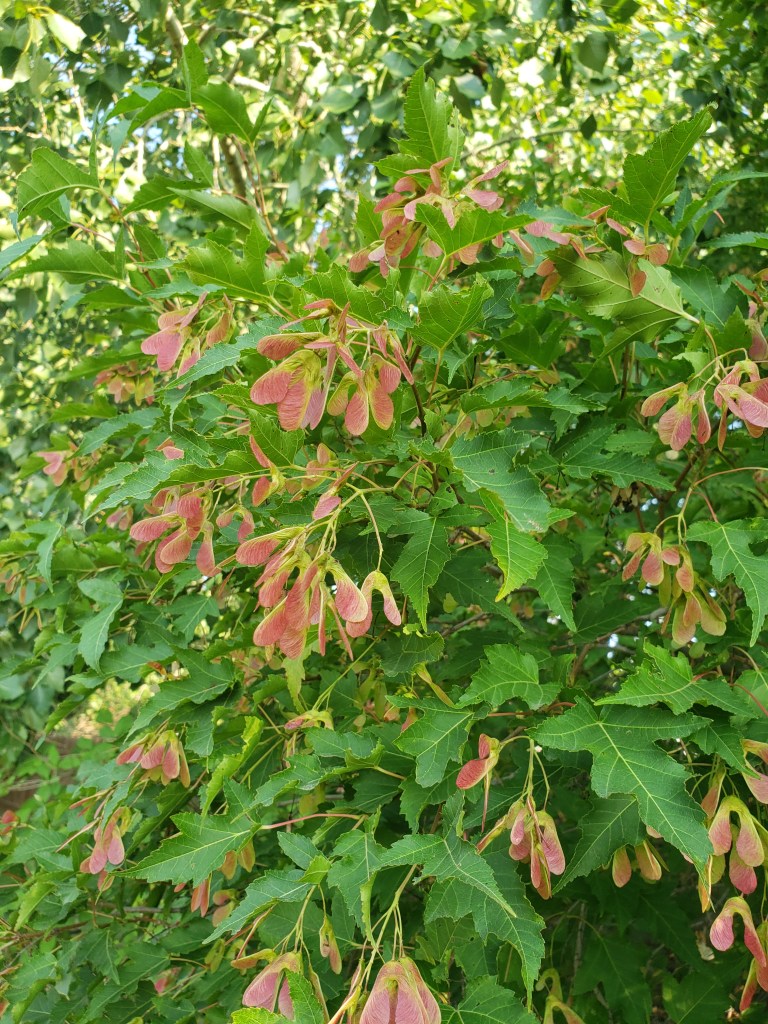
    Colourful samaras on an Amur Maple. Photo: PeaceSignsPruners

    The gardeners’ world has become like the fashion world: every season there are new releases, new ‘must-haves’, new colours and shapes! If you’re on social media the algorithm has picked up on your like for gardens and you are deluged with ads for the latest plants as well as influencer posts declaring their love for the new and nifty.

    How do we get new plants? Well, there are a few ways. There is the time honoured tradition of exploration and discovery. It’s seems almost unbelievable but there are still places on this Earth where humans have rarely walked. The deepest corners of the Amazon, the heights of the Andes or the meadows of the Alps, to name a few, all hold plants never catalogued. You have to be a real plant nerd to keep up on these things. Here’s Kew Gardens’ list of the most exciting discoveries of 2023. A tree that grows underground? How fantastic!

    Plant exploration and discovery does not hold the prestige it once did but there are still intrepid scientists out there. When the New World was still new to Europeans, fortunes could be made by introducing new plants. Have you heard of ‘Tulip Mania’ in the 1600’s? The tulip, introduced from Turkey, had some interesting and exotic varieties. Collectors went a little crazy and the price rose astronomically, fueling a financial collapse when prices finally bottomed out. Read more about it here. Or how about Victorian Fern Cases? When a glass box was designed to keep Amazonian species alive, collectors went a little crazy for ferns. You were nobody if you didn’t have a Fern Case with an exotic specimen. Read more about that here.

    Another way that we get new plants is by selection. This has been used since ancient times, when the first farmers noticed a grain that produced better and saved seed from it for replanting. It can be applied to any plant. Imagine a family farm that grows a tree for the horticultural trade. They grow nothing but, say, Amur Maple (Acer tataricum subsp. ginnala), ten thousand of them in the field. The farmer notices that one tree has brighter samaras (seed pods), a more vibrant pink than most. It’s got a nice form and habit: straight trunk, not too large a canopy, good fall colour. This tree is different, it’s special with those bright seed pods. So the farm begins to propagate it from cuttings, to clone it and make exact replicas. And so, Amur Maple ‘Ruby Slippers’ was created. The document here states that the finders started propagating in 1991 and the tree was trademarked in 2004.

    There is money to be made by selecting superior plants. Once patented a small fee will go to the farm for every sale. It can be big money when it’s a plant that can sell to a large audience. It is also a process that one has to invest time in, the plant must be cloned and the offspring must be watched to show that the DNA is consistent. The grower must allow the tree to become old enough to produce seed. Rushing to market can lead to professional embarrassment; anyone remember a variegated weigela released that refused to stay variegated? Once the shrub rooted in, all the branches it produced were plain green. The plain branches were much more vigorous than the variegated so one had to continually prune out the unwanted branches. This left a puny shrub that usually died.

    We get new plants from breeding and crossbreeding. This is taking the pollen of one plant and applying it to the stamen of another, creating a hybrid. In the modern age this can also mean taking genes from one plant and inserting them in another. The point is to get the best qualities of both plants. This can be a long process; one must allow the offspring to develop, test them to see that they have the desired qualities and test again to see if the seed the offspring develops stays true. The processes began to be understood in the 1800’s, when Gregor Mendel starting working with peas.

    Breeding plants can be very profitable. These plants can be patented and the breeder receives a royalty each time one is sold. It is a meticulous, painstaking process. There is always a goal: bigger blooms, better disease resistance, better leaf colour. All the crosses, all the parents, must be recorded and the outcome recorded. The new plants must be grown and observed. If the outcome is not achieved, the breeder must continue with more cross pollination, adding a different parent. And so on, until the goal is achieved.

    Have you ever saved seed from your garden, planted it and got something totally unexpected? You might have bred a new variety and you could make a bunch of money!

    No comments on How Do We Get New Plants?
  • You and Pollinators Need This!

    September 25, 2024
    Design, Gardening, Landscape, Plants
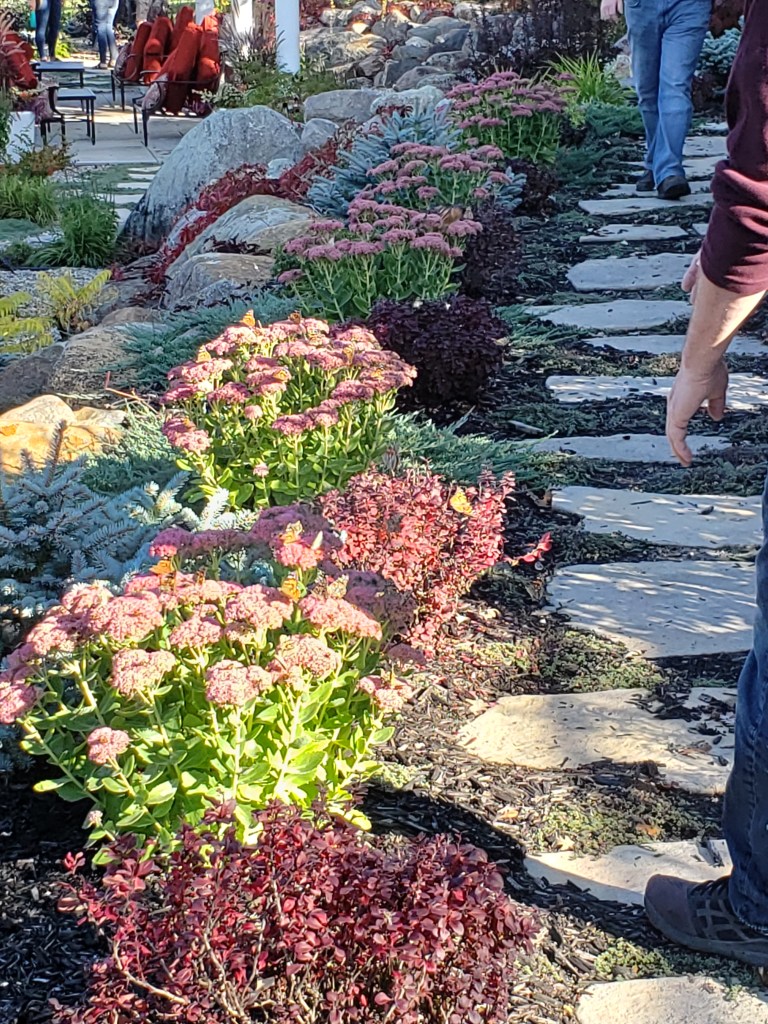
    Border with sedum, barberry and blue spruce. Photo PeaceSignsPruners

    I think every gardener should plant Sedum ‘Autumn Joy’. It is such a delightful plant and very hardy for those of us in cold climates. And pollinators of all sorts love it and need it.

    Here in Manitoba we’ve already had a few cold nights (down to +4o Celsius, or 39o F.) Some areas have had a touch of frost. Annuals are looking worn out, most perennials are finished and leaves are starting to change colour. Sedum ‘Autumn Joy’ is just now looking fantastic and is going strong. And everywhere I see it it is covered with pollinators of all sorts. Bees of all types are looking for that last addition to their stores, late emerging monarch butterflies need a good boost before heading south, even moths are flocking to the upright sedums. And when gardens are looking tired, the upright sedums are giving good colour and form.

    There are many hardy sedums that deserve attention. There are many that are not that hardy and make excellent houseplants. There are ground cover sedums, low mounding sedums and, of course, the upright sedums. All are fleshy plants, offer interesting texture; they like very good drainage and full sun. Once established they will tolerate drought for extended periods, will thrive in sun-baked conditions where other plants struggle.

    Stonecrop is one of the common names for sedum, as is orpine and Ice Plant. Careful when shopping as there is another plant whose common name is Ice Plant. Also beware that botanists consider some sedums to be a different genus: Hylotelephium. Such is the case with ‘Autumn Joy’. The tag at the garden centre may say Hylotelephium or Sedum.

    The upright sedums will grow 30 – 60 cm (12 – 24″) tall, depending on variety, with spreads similar to the height. They bloom in shades from bright pink to rose to peach. The stems are fleshy, leaves fleshy in shades from blue-green to burgundy. A word of caution: some of the darker varieties seem a wee bit harder to overwinter, experienced gardeners I know have struggled with them. Don’t cut them back and cover well with snow. Trim at least in half come Spring.

    It’s exciting that some of the leading growers are paying attention to sedums. The new introductions like ‘Rock ‘n GrowTM Back in Black’ and ‘Banana Split’ look beautiful, but we need a few seasons of having them planted to prove their hardiness. The other major bonus for planting sedums? Deer don’t seem to like them at all!

    2 comments on You and Pollinators Need This!
  • How Does That Climb?

    September 19, 2024
    Design, Landscape, Plants
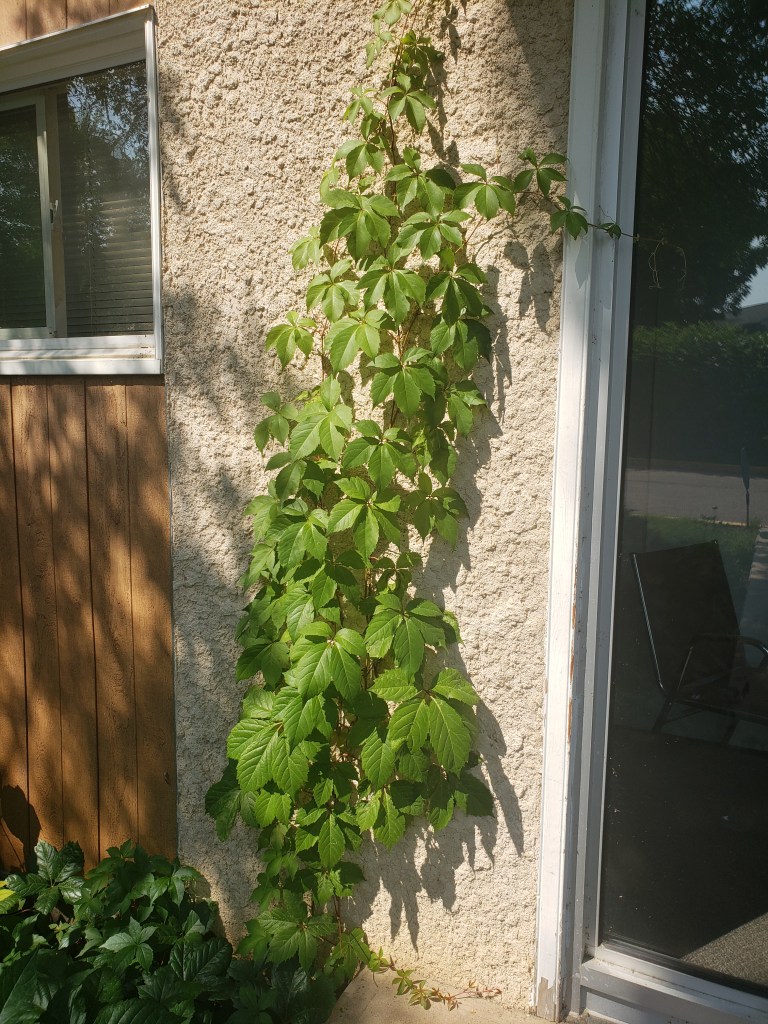
    Virginia Creeper (Parthenocissus) climbing a wall. Photo: PeaceSignsPruners

    Have you ever acquired a new vine, planted it by an appropriate trellis, taken a few of the longest tendrils, wrapped them around the trellis? Come out the next morning and the vine has fallen right off the trellis and is lying on the ground? Well, you’re doing it wrong. You probably wrapped clockwise when your vine wants to climb counter-clockwise.

    Yes, vines are very particular about how they climb. If you don’t go along, they just refuse to co-operate with you. Vines climb in a number of different ways, but each type of vine is quite specific about how they will do it.

    Some vines climb by simply wrapping their stem around the support. Some climb by producing tendrils, a special type of shoot or leaf. Other vines use a type of root, called adventitious, which clings to the support or even a wall. Some have tendrils with a sticky pad that can attach to walls. Some, such as climbing roses, use their thorns to hook onto branches or trellises and heave themselves upward.

    The biological point of climbing is to receive more sunlight along the plant stems and leaves. If left without a proper surface to climb, vines become groundcovers, still growing but along the ground. If you’ve been to the tropics, you’ve seen some of our favorite houseplants climbing high. Monstera, Philodendron and Pothos to name a few will climb to get above the dense jungle floor. Although we tend to treat them as bushes or hanging plants all of these will quite happily climb.

    Tendrils are a fascinating mechanism. You will have seen tendrils in action if you’ve grown peas, cucumbers and squash. A tendril reaches to the light, senses a support and grows toward it. Once the tendril touches a support, regardless of direction, cells on the outside of that tendril grow quickly causing the tendril to bend inward. The science is just been discovered, here is an interesting article on research done with cucumbers.

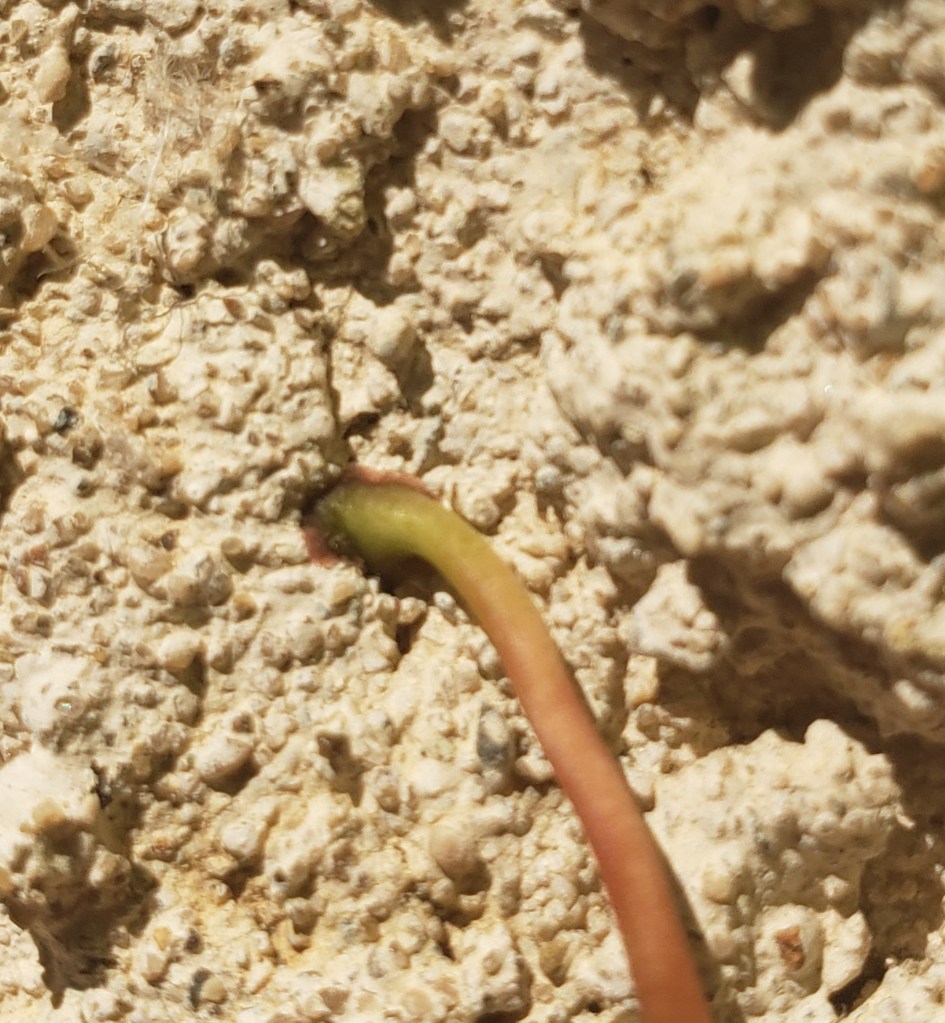
    Detail of the Virginia Creeper pictured above. Photo: PeaceSignsPruners

    Virginia Creeper (Parthenocissus), a hardy favourite in colder climates, produces a type of tendril which has a sticky pad at the end. This allows the plant to climb walls and fences with no support. The tendrils make is a fast climber on supports like chain link fences. The sticky pad can adhere to wood, live trees and building products such as walls and fences. It can climb concrete and brick but it is a slower process. It can be good on a slope for soil erosion as the pads will adhere to rocks and wood pieces on a slope. If you wish to remove Virginia Creeper from a surface those sticky pads can remove paint and finishes. It is better to prune the plant below where you wish to remove growth and let it die back. The pads will dry up and release.

    Although not hardy for us on the Prairies, English Ivy (Hedera) is an enthusiastic climber. We use it more as a hanging basket or spiller. England is famous for cozy cottages covered in ivy. English Ivy climbs by producing a type of root along it’s stem called an adventitious root. The roots will work their way into bark, the mortar of bricks, cement and stucco. It’s very sturdy and can climb for decades. It can cause damage by working it’s way under bark, or into the crevices of mortar. Mature trees laden with English Ivy are known to fall in storms more often. If the home and ivy are properly maintained (!) damage should not occur. Read more here from BBC Gardeners World.

    The plants that twine their stems around a support are a diverse bunch. This is where direction is important. Most vines twine counter-clockwise, research showed only about 10% of vines wind clockwise. Hops (Humulus), Honeysuckle vine (Lonicera), Japanese Wisteria (Wisteria floribunda) all twine clockwise. Interestingly, American Wisteria (Wisteria frutescens) twines counter-clockwise. Virgin’s Bower Clematis (Clematis) uses tendrils to climb. Most clematis wind the leaf stem around the support, so the support needs to be thin and frequent.

    There is a current trend for moss poles, plant clips and other supports in houseplants. This is to mimic how they climb in the wild. Monstera use aerial roots to climb; new gardeners growing them as a shrubby houseplant often wonder what those dark things hanging from the plant are. Philodendrons use adventitious roots. Creeping fig (Ficus) use tendrils with pads. Please do remember, if tying your plant up to get it started, use a soft material so as not to cut the bark.

    1 comment on How Does That Climb?
1 2 3 … 12
Next Page

Start a Blog at WordPress.com.

Peace Signs and Pruners

Caring for Mother Nature While Making Her a Little Bit Prettier!

    • About
    • Search Categories


Loading Comments...
 

    • Subscribe Subscribed
      • Peace Signs and Pruners
      • Join 25 other subscribers
      • Already have a WordPress.com account? Log in now.
      • Peace Signs and Pruners
      • Subscribe Subscribed
      • Sign up
      • Log in
      • Report this content
      • View site in Reader
      • Manage subscriptions
      • Collapse this bar