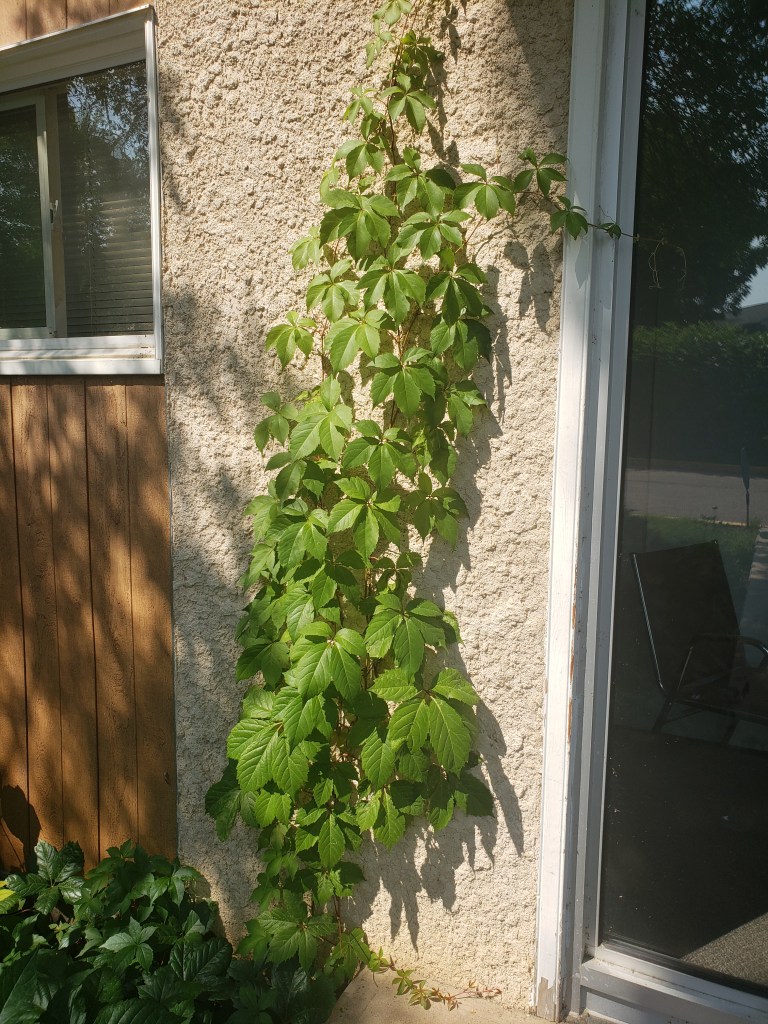
Have you ever acquired a new vine, planted it by an appropriate trellis, taken a few of the longest tendrils, wrapped them around the trellis? Come out the next morning and the vine has fallen right off the trellis and is lying on the ground? Well, you’re doing it wrong. You probably wrapped clockwise when your vine wants to climb counter-clockwise.
Yes, vines are very particular about how they climb. If you don’t go along, they just refuse to co-operate with you. Vines climb in a number of different ways, but each type of vine is quite specific about how they will do it.
Some vines climb by simply wrapping their stem around the support. Some climb by producing tendrils, a special type of shoot or leaf. Other vines use a type of root, called adventitious, which clings to the support or even a wall. Some have tendrils with a sticky pad that can attach to walls. Some, such as climbing roses, use their thorns to hook onto branches or trellises and heave themselves upward.
The biological point of climbing is to receive more sunlight along the plant stems and leaves. If left without a proper surface to climb, vines become groundcovers, still growing but along the ground. If you’ve been to the tropics, you’ve seen some of our favorite houseplants climbing high. Monstera, Philodendron and Pothos to name a few will climb to get above the dense jungle floor. Although we tend to treat them as bushes or hanging plants all of these will quite happily climb.
Tendrils are a fascinating mechanism. You will have seen tendrils in action if you’ve grown peas, cucumbers and squash. A tendril reaches to the light, senses a support and grows toward it. Once the tendril touches a support, regardless of direction, cells on the outside of that tendril grow quickly causing the tendril to bend inward. The science is just been discovered, here is an interesting article on research done with cucumbers.
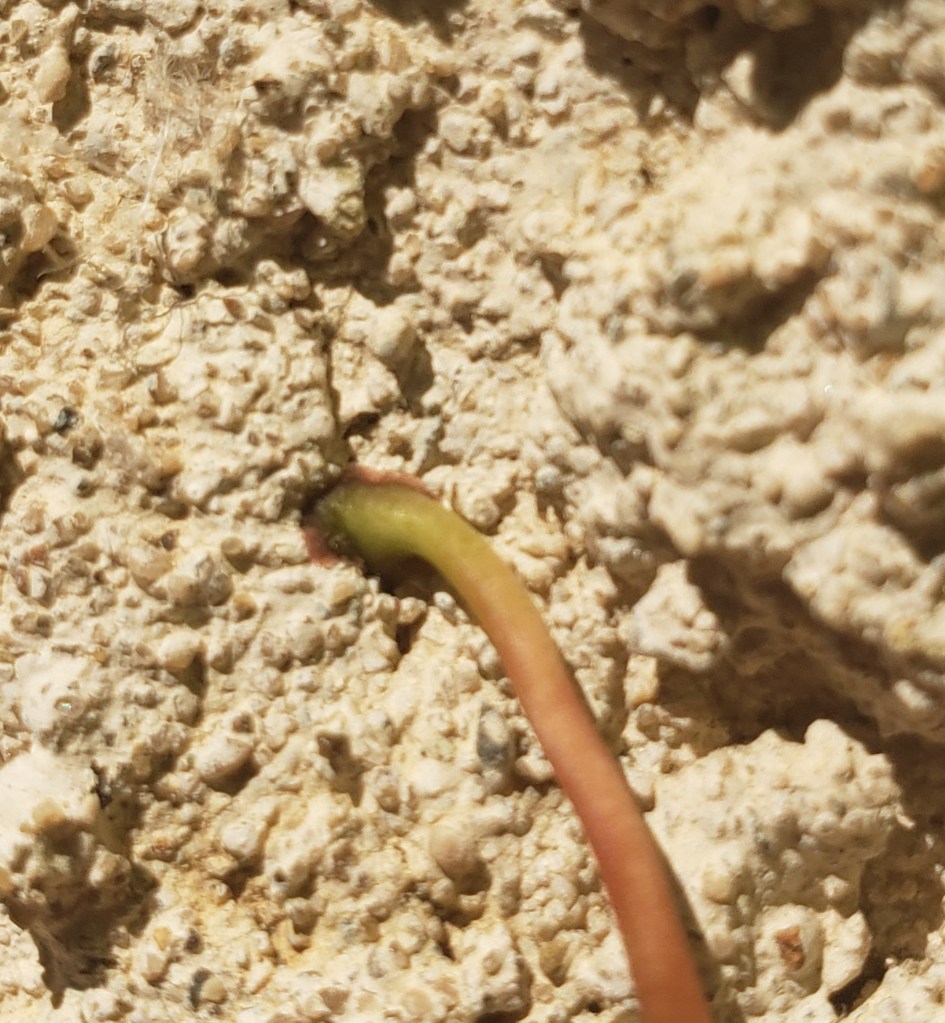
Virginia Creeper (Parthenocissus), a hardy favourite in colder climates, produces a type of tendril which has a sticky pad at the end. This allows the plant to climb walls and fences with no support. The tendrils make is a fast climber on supports like chain link fences. The sticky pad can adhere to wood, live trees and building products such as walls and fences. It can climb concrete and brick but it is a slower process. It can be good on a slope for soil erosion as the pads will adhere to rocks and wood pieces on a slope. If you wish to remove Virginia Creeper from a surface those sticky pads can remove paint and finishes. It is better to prune the plant below where you wish to remove growth and let it die back. The pads will dry up and release.
Although not hardy for us on the Prairies, English Ivy (Hedera) is an enthusiastic climber. We use it more as a hanging basket or spiller. England is famous for cozy cottages covered in ivy. English Ivy climbs by producing a type of root along it’s stem called an adventitious root. The roots will work their way into bark, the mortar of bricks, cement and stucco. It’s very sturdy and can climb for decades. It can cause damage by working it’s way under bark, or into the crevices of mortar. Mature trees laden with English Ivy are known to fall in storms more often. If the home and ivy are properly maintained (!) damage should not occur. Read more here from BBC Gardeners World.
The plants that twine their stems around a support are a diverse bunch. This is where direction is important. Most vines twine counter-clockwise, research showed only about 10% of vines wind clockwise. Hops (Humulus), Honeysuckle vine (Lonicera), Japanese Wisteria (Wisteria floribunda) all twine clockwise. Interestingly, American Wisteria (Wisteria frutescens) twines counter-clockwise. Virgin’s Bower Clematis (Clematis) uses tendrils to climb. Most clematis wind the leaf stem around the support, so the support needs to be thin and frequent.
There is a current trend for moss poles, plant clips and other supports in houseplants. This is to mimic how they climb in the wild. Monstera use aerial roots to climb; new gardeners growing them as a shrubby houseplant often wonder what those dark things hanging from the plant are. Philodendrons use adventitious roots. Creeping fig (Ficus) use tendrils with pads. Please do remember, if tying your plant up to get it started, use a soft material so as not to cut the bark.

 Peace Signs and Pruners
Leave a comment