Bee City Brandon in Manitoba has created a beautiful calendar for 2024. It’s a fundraiser for the re-wilding of Eleanor Kidd Garden, a treasure destroyed but flooding. Orders should be in by November 18th.
The calendar would be a great Christmas gift for so many people! First, it’s beautiful; the photography by local artist Cynthia Korman is stunning. Any nature lover would adore this. Any gardener interested in beautiful, hardy plants would love this, and learn new things all year! Anyone interested in helping pollinators would make good use of this. Anyone interested in native plants on the Prairies would value this calendar. Teachers could use it in the classroom.
The calendar is raising funds to rehabilitate the now derelict park. The City of Brandon has no funds available (think new bridge), and must consider the costs of investing in a park that may flood again in future years. That is why they invited Bee City Brandon to develop a pollinator-friendly, native garden that could be beautiful and withstand flooding.
The calendar is just one of the many ways Bee City Brandon is raising money. The committee has been applying for grants and working on other projects. The work will be almost entirely be done by volunteers so if you’re in Brandon, with fond memories of Eleanor Kidd Garden, sign up here to volunteer some weeding or planting new year. Hopefully I’ll see you there!
Every season that I’ve worked in a garden center someone invariably seeks help to create a no maintenance garden. Well, sorry, that’s only going to happen if you let your property go derelict. Then your neighbours will complain to the city, the municipality or the HOA and you’ll be served orders, you’ll be fined…it will be a mess!
If you really want no maintenance you must have the budget for hiring professionals to do your gardening or move into a condo or townhouse where things are taken care of as part of your fee structure. Even if you paved your entire yard sooner or later some dirt will blow into the joints, some seeds of tough, survivor weeds will blow in, a little rain and…Mother Nature will supply some greenery for you.
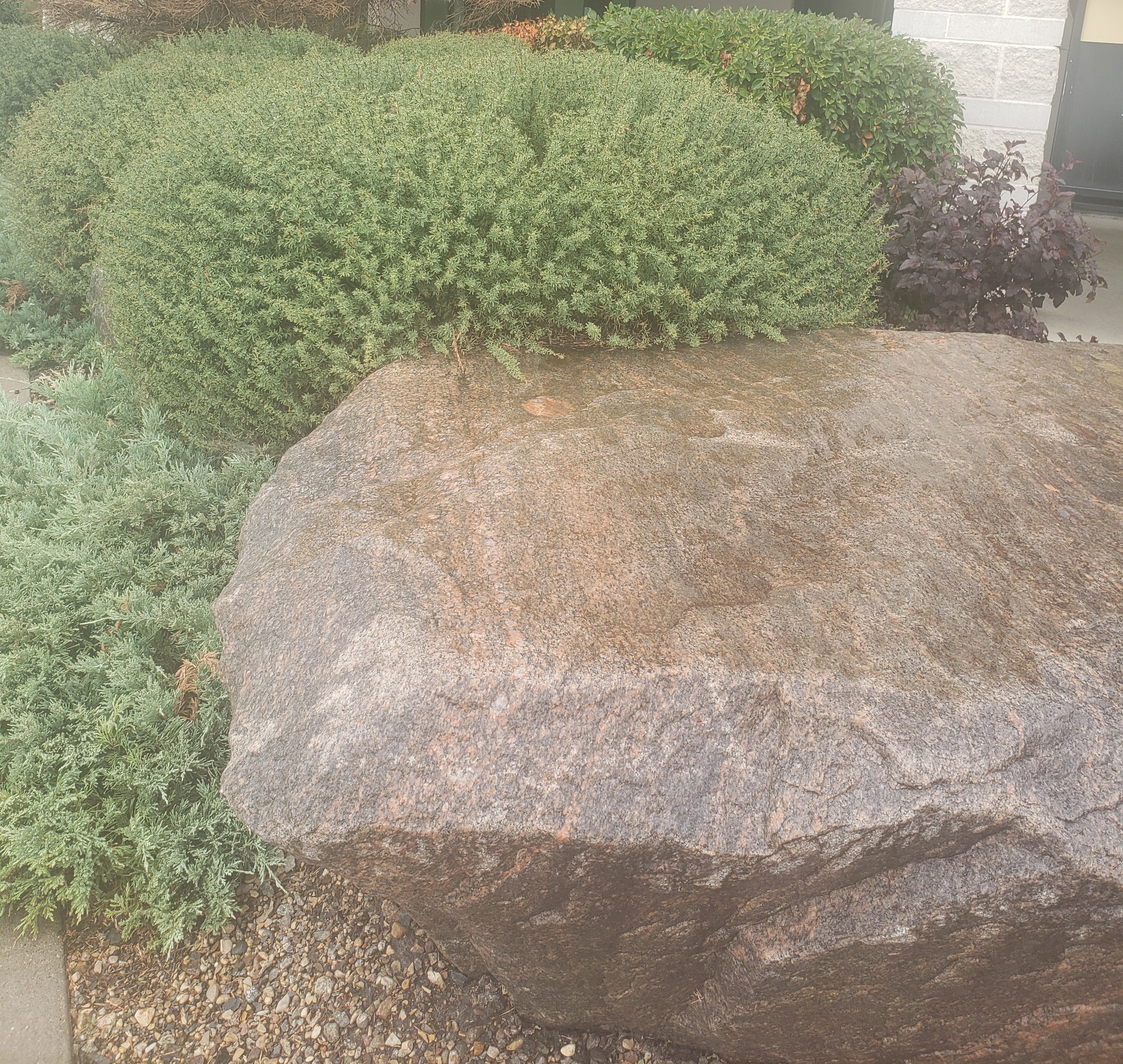
Now, a rock is low maintenance. Brush it off in Spring, sweep it late fall and you’re done. Boulders and rocks can be very attractive in the landscape. The point of landscape design, once issues like privacy, shade, windbreak are taken care of, is to entertain and amuse the eye. Rocks can add interest, relieving endless greenery. They can provide structure as in a raised bed, seating or a platform for summer annual containers. They can come in all shapes and sizes, they come in colours that can co-ordinate or contrast with the building.
Photo: Peace Signs & Pruners
The photo at the left shows a charming scenario. Here on the Canadian Prairies wagon wheels are a decorative ‘thing’. This installation is on a corner lot keeping people from tramping over the grass and compacting the roots of the mature tree. It’s different, it’s interesting and the ornamental grass (undoubtedly Calamagrostis ‘Karl Foerster’) is very hardy. My only objection, as a landscape designer, is that we like things in odd numbers, and this has too many pairs. But that’s a whole other blog post. The boulder is nicely matched with a mulch of small rocks.
The logistics of incorporating large boulders is that machinery is required to place them. Many landscape installation companies or landscape supply stores will sell rocks. The bigger the boulder, the more likely machinery will be required to move and place it. That could be two workers, a skid-steer loader and a couple of hours. That can get expensive. Smaller rocks can be loaded onto a truck or trailer at the supply store and can be moved by a wheelbarrow or even a tarp.
Did you know there are faux rocks? Made of polymer/resin they can be quite attractive. There are large ones specifically meant to hide septic tank covers. They are easily moved, quite often coming with stakes to secure them to the ground. Take a peek at some on the website Wayfair here. As well, YouTube has instructions on making your own, just one example is here. If you really want low maintenance and have run-off issues, consider creating a dry stream bed. You can run one from your downspouts out to where your garden needs water, re-directing from your basement. Here’s some great instructions from Garden Therapy here.
October has been fantastic on the Prairies. According to The Weather Network, that is about to change. This week temperatures are dropping with days barely above freezing, nights below freezing and, yes, snow by the weekend. Last chance to get a few things done in comfort.
My Instagram is full of landscape design, gardening, houseplants and, well, animal rescues. I saw this piece last night from Shelmerdine’s, a locally-owned garden center in Winnipeg. I thought I’d share because it has a number of good points.
Now is the time to change over your tired or frosted summer containers. Harvest from your own yard or from nature walks. Fill them full! This container even has the fronds of a houseplant, a palm. The container and branches can be quite neutral; you can jazz it up with mini squash or wee witches on picks for Halloween, closer to Christmas add bright baubles and lights. Once the pot freezes, it will remain quite nice looking right past New Year’s. If it is in full sun you may see some browning, but you can cover that when seasonal evergreen boughs appear in garden centers in the next month.
Enjoy a fall walk through your garden and get ready for great containers all winter.
It’s the Autumnal Equinox. At 2:50 AM EDT the Sun passed the equator and the Southern Hemisphere welcomes Spring. Here on the Canadian Prairies it has felt ‘fallish’ for a few weeks. The days are much shorter, we’ve had a few nights get as low as 2o Celsius (35oF.) with light frost in a few areas. Trees and shrubs are changing colour, leaves are already dropping, birds and butterflies have been gathering to migrate.
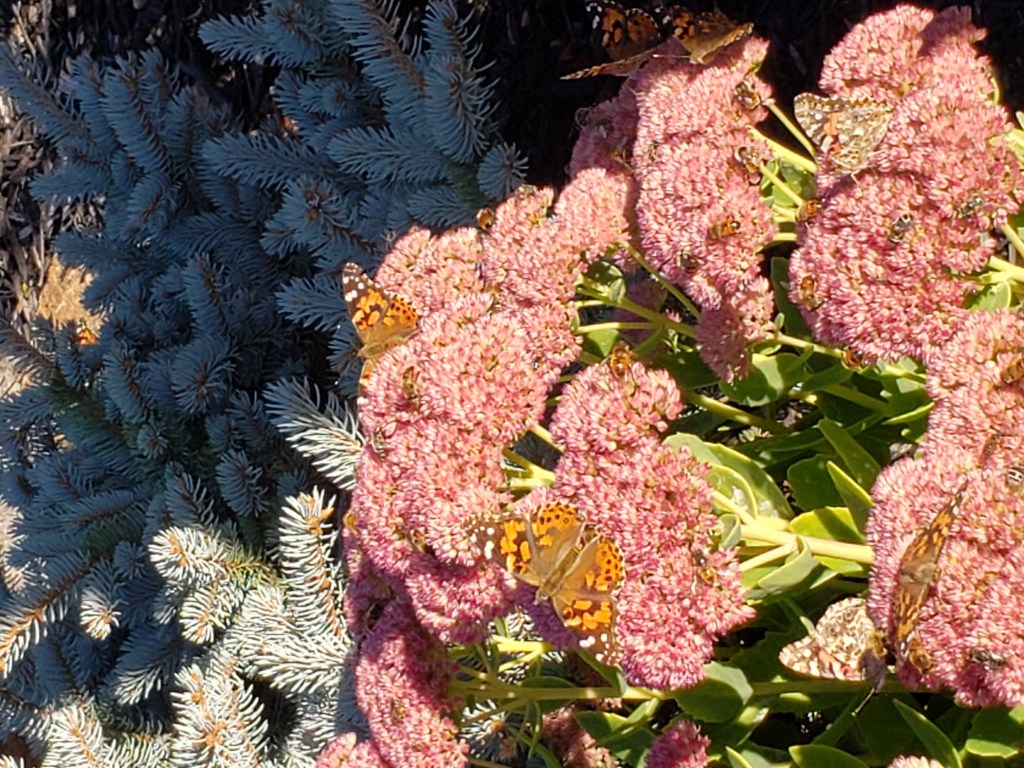
Sedum ‘Autumn Joy’ with Blue Spruce. Photo taken September 21, 2021. Note the Monarch Butterflies and Bees. Photo Author’s Own.
What does every Fall garden need? Fall blooming perennials. Those perennials that start blooming late, and can bloom right through light frosts, are a joy to have now. For Zone 3 gardeners look for hardy grasses, Mums (Chrysanthemums), Asters (Asters), Black-eyed Susan (Rudbeckia), Coneflower (Echinacea) and one of my favourites, Sedum.
If you have deadheaded summer blooming perennials you will likely get a second flush of flowers from such as Sage(Salvia), Russian Sage (Perovskia), Speedwell (Veronica) and even Bleeding Heart (Dicentra) may make a comeback as the weather cools. As plants are on sale at local garden centers, it’s a good time to indulge.
It’s not just the beauty of Fall colour; pollinators, other insects and birds really need this source of food. Monarch butterflies will feast on nectar before beginning their migration. Birds will fatten up on seedheads of grasses and flowers.
Get out the plaid clothes, grab a pumpkin latte or muffin and enjoy the Fall garden!
September has arrived and here in Manitoba the temperatures have already slid downward. Monday evening the temperature went down to 2o Celsius (35o F.) Very glad I had taken my basil inside! It would not have appreciated that chill and it’s doing very well right now. There is lots more good eating to come from that plant. When I’m home it can go out for the day but pretty soon it will become a houseplant, under grow lights.
Many people are already looking forward to cleaning up the garden and largely not thinking about it until Spring. May I suggest an alternative? I think people should relax and enjoy the Fall. Sit in the sun, even if a down vest is required, enjoy a beverage, admire the changing leaves, watch the birds gather to migrate.
There are a number of good reasons to leave your garden. First, for those of us in cold climates, snow is our best blanket and insulator for roots and crowns. With the foliage up, plants will trap snow; it will shield the soil from temperature fluctuations right through until Spring. It also means that spring melt will offer extra moisture right where you need it: at your plants’ roots.
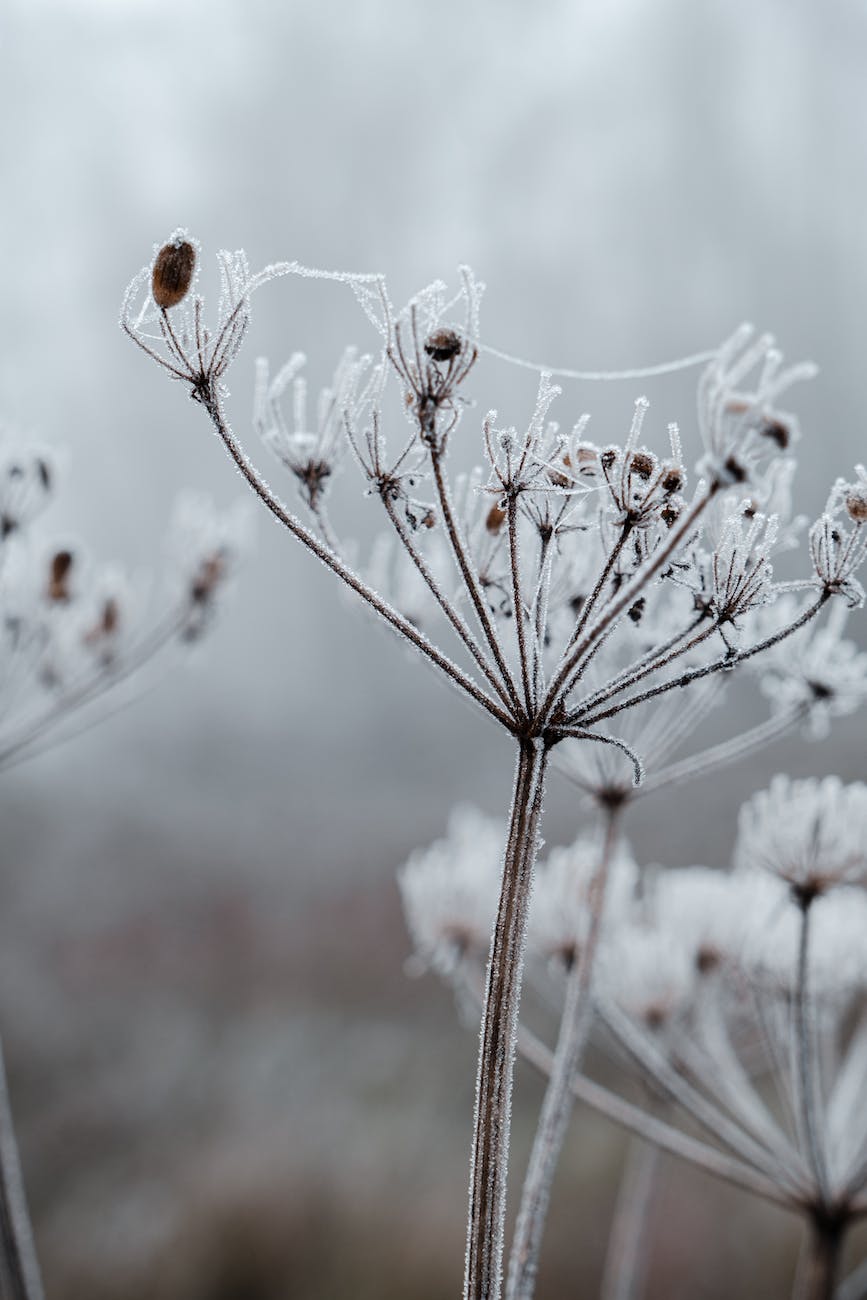
Second, from a design point of view, I find that the foliage of perennials and shrubs peeking from the snow to be far more interesting to the eye than a bland bank of snow. Of course trees are standing tall but something more at knee height offers easy views. The colourful twigs of dogwoods (Cornus), the persistent berries of chokeberry (Aronia) or the tan blooms of hydrangea (Hydrangea) are all interesting in a sea of whiteness.
Perhaps the most important reason to leave your garden: it will protect our pollinators and native insects. Many bugs over-winter in the foliage of plants, near the roots or just under the soil surface. They survive as eggs, larvae or pupae, as well as adults. Yes, some may be ‘bad’ bugs but most will be benign if not beneficial. Here’s an excellent article from the Manitoba Museum on plants and insects surviving our frigid winter. Another plus: many of these blooms and berries will provide food for birds through a cold winter, bringing life to the garden.
Can you do it? Can you leave your garden to Mother Nature’s care?

 Peace Signs and Pruners