June 5th has been proclaimed World Environment Day by the United Nations Environment Programme (UNEP). It was first proclaimed in 1973: yes, over fifty years ago! Fifty years ago the world knew that land restoration, desertification and drought resilience were important issues for Planet Earth!
June 5th is also National Ketchup Day, National Start Over Day, National Veggie Burger Day and National Moonshine day. I certainly hope World Environment Day is uppermost in peoples’ minds.
There’s a new gardening trend making the rounds of social media. It’s called chaos gardening. In it’s purest form you take a bunch of seeds of what ever you wish to grow: herbs, grasses, flowers, vegetables and/or fruit. You mix them up and then toss them around willy-nilly. Water and wait. Really! It’s that simple!
This is the antithesis of formal gardening. If you’re not sure what a formal garden is think palaces. The gardens of Versailles are one of the best known examples. The gardens are severely structured with straight lines, precise hedging, clipped and shaped topiaries and perhaps a maze. They ultimately were created to showcase the power and prestige of the owner, demonstrating their control over Mother Nature.
Chaos gardening is allowing Mother Nature to rule. Whatever sprouts and grows goes! A chaotic garden will be a jumble of plants, colour and foliage. Peas will try to climb up milkweed or other tall flowers, beans may just grow along the ground. I believe the trend took off in the last few years as people became more interested in reducing (demanding) lawns and supporting pollinating insects, with a move first to natural or meadow gardens. Chaos gardening is the meadow freed from all restrictions or designs.
Nothing can ever be too simple, right? There are a few issues that must be dealt with for success. A basic rule of planting seeds is that they are buried to a depth three times their width. So, if you wish to grow winter squash (a large seed) and lettuce (a small seed) something is not going to be happy enough to sprout. If may be necessary to divide your seed stash into sizes. Fling around the large seeds, then cover with a light layer of soil. Broadcast medium seeds then cover with a light layer of soil. Finally, your small seeds can be cast about.
What you choose to grow is entirely up to you. I lot of what I’m seeing is people using up their seed stashes, vegetable or flower seeds that may be many years old. That’s fantastic, but you may get spotty germination. Some people are looking to create wildflower or native gardens. I’d advise that you not buy the wildflower mixes in box stores and some garden centres because they may not be formulated for your area. If you want a lot of this garden to come back next year choose hardy perennials seeds, native seeds from a local grower or self-seeding annuals. Do a little research because what just barely survives for me on the Canadian Prairies may be considered invasive in the warmer climate of southern Ontario or BC. Think of kudzu, the plant over-taking the southern US. Originally introduced as a pretty, fast growing vine from the Orient it is now clogging waterways and strangling trees.
I’m not sure chaos gardening is for the new gardener. Would a new gardener recognize a cucumber plant? Would they know to go looking for zucchini under the big mound of leaves? I’m still not sure what the parameters are for weeding. Does one accept all plants? Dandelions? Stinging Nettle? If you’re in a short season climate like mine we will not be able to broadcast seed for long season crops like tomato, pepper and some herbs and expect to get a crop. Us cold-climate gardeners will still have to start those seeds inside late winter and plant them out. Do we toss the pot into the chaos garden and then plant where it lands?
I’ll be watching some of the social media accounts engaged in this; it will be interesting to see their successes and failures. If you’d like to learn more here’s a article after chaos gardening appeared at the vaunted Chelsea Flower Show in England and here’s one from one of my favourite blogs The Spruce. Is this a trend you’ll try? Or do you like a bit more control in your borders?
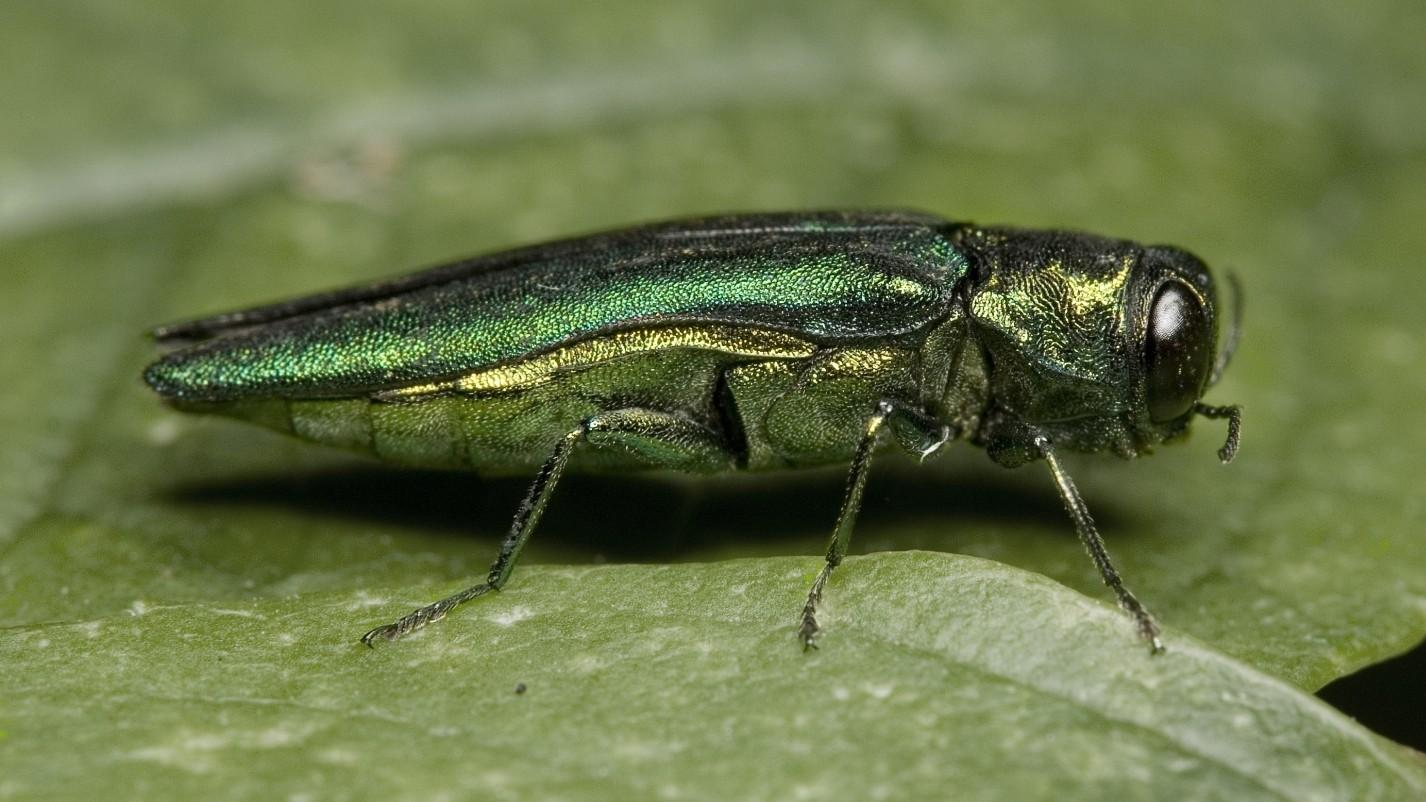
The Canadian Food Inspection Agency has announced that Emerald Ash Borer has been discovered in Vancouver, BC. If you’re not familiar, EAB is an extremely harmful pest imported from Asia on shipping materials like ash-wood pallets. It is extremely harmful because it loves ash trees (Fraxinus) and has no natural predators in North America.
Those of you of a certain age will remember the devastation caused by Dutch Elm Disease (DED), a fungal disease that, again, probably arrived in wood pallets made of elm. Our native elm beetles munched on the pallets, ingested the disease and then spread it to our native elms. Our native elms had not evolved any defence to this foreign invader and millions of elms died. The elm is a hardy, tough, glorious shade tree that had been widely planted on the Prairies. Suddenly, main streets, parks and home landscapes were bare, with a loss of shade, loss of habitat for birds and small critters, increases in wind speeds and, well, just a huge loss of natural beauty.
The Emerald Ash Borer lays eggs on the bark which hatch, burrow in and then tunnel their way through the tree, disrupting the vessels that carry water and nutrients up and down the tree. Programs in the U.S. and Canada have not had much success killing the beetles; the young beetles are well protected inside the tree and the window of opportunity to kill the adults as they emerged in the spring to lay eggs was very small.
Like DED, the losses to EAB can be devastating to habitat, loss of cooling effect and the beauty of parks and gardens. This is amplified now by the threat of forest fires; dead, dry trees in the environment provide excellent fuel.
It is believed EAB first landed in ports in Detroit, Michigan and Windsor Ontario in 2002, affecting our native green and black ash. These species grow mainly in colder climates in east and central Canada and the US. It was hoped that the extreme cold of the Prairies would stop the bug, but it has over-wintered in Manitoba. There are other native ash species in the west in California, Oregon and as far south as the Carolinas in the US. There’s an excellent article here on all the North American species. The fear for horticulturalists is that the bug can now spread from the west out and south.
So, please do ‘due diligence’. There will be bans on transporting ash firewood, much as there are bans on moving elm wood. Nurseries in the west of Canada and the US may quit carrying stock of ash trees.
If you’re a Prairie gardener, April is the hardest month of the gardening year. My social media feeds, for months, have been filled with blossoms and buds. I follow blogs and creators from around the globe so I’ve been forced to endure lovely witch hazel blooms since just after the New Year. Then it has been the cherry blossoms, now the magnolias and rhododendrons.
Meanwhile, on the Canadian Prairies March was still winter. Then, in April we started to see some warming trends. The snow pack started to recede, then it snowed and got cold again. It would get above freezing during the day, then freeze at night making for icy, dangerous roads and sidewalks. Then it snowed a bit again, about the time of the Eclipse. The last two days the weather has been like summer, highs in the low 20’s Celsuis (68o F.) By Saturday night we’re going to be below freezing again!
As the snow recedes, what is revealed is not pretty. Brown grass, sometimes with a white scurf known as snow mould. Barren shrubs, desiccated foliage of perennials, masses of slimy, wet leaves. And on many driveways and parking lots huge mounds of snow from the removal crews that are gray from the road sand and full of garbage. Not very attractive.
These unpredictable temperatures are one of the reasons it is really hard to harvest apricots in Zone 3. We can grow the trees but it is hard to get fruit. Anything that blooms early in the season, meaning most fruit, made the flower buds last fall. They’ve been sitting, well protected, waiting for conditions to be right. The apricot, unfortunately, is just a little too enthusiastic and may have started to open buds. They may got frosted off Saturday night when freezing temperatures return. Hence, no fruit.
The other thing that is so difficult for me is the pictures of all the plants I love but can no longer grow. We came from the West Coast, Zone 8/9. We find ourselves in Zone 3. I adore witch hazel with those spikey, funky flowers and light fragrance. Hmmm, and magnolias, with those large waxy flowers! The Kousa dogwoods, Japanese cherries, magnificent rhododendrons, hellebores, even delightful snowdrops are hard to over-winter here.
Ah, but soon…the weather will stabilize and forsythias will go off. Well, usually branches under the snow pack will bloom. The tops sticking out of the snow may be too dessicated. You see? It’s hard to be a Prairie gardener!
Or Seedy Saturday? Or Seedy Tuesday Night, whenever the event is occurring in your area. It’s the start of the gardening season for me, and I love the event. So glad it’s back in full force after the pandemic shut down. It’s an opportunity for home gardeners to share or swap seeds they have saved. It’s a gathering of like-minded individuals who can trade information and knowledge.
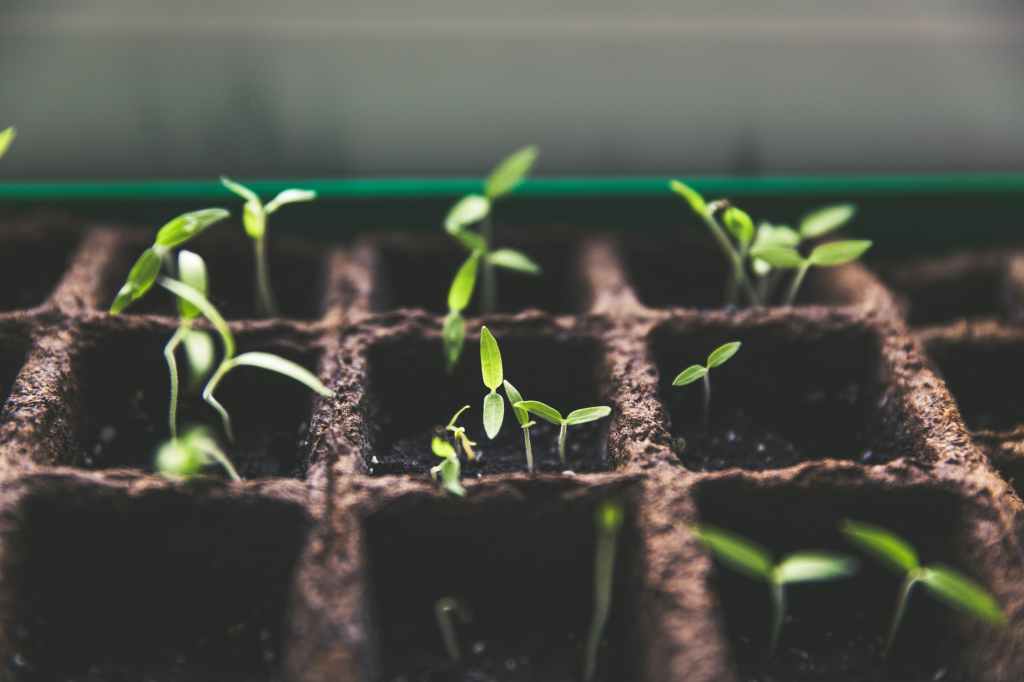
What is Seedy Saturday? It’s a totally Canadian thing, first founded in 1990 by a Sharon Rempel, a member of Van Dusen Botanical Garden in Vancouver. She was looking for heritage seeds for a project and eventually turned to her community to find sources. She was kind enough to put the name into the public domain, so anyone can use it. Seeds of Diversity Canada has taken on the role of keeping the country informed of events. Check out the link for info on organizing an event, some pointers on what to take and do. It’s a February/March thing, which is when we want seeds that need to be started indoors.
What’s so fantastic? The events are totally local. Local gardeners swapping seeds. The seeds are appropriate for your area, you can get information from the grower. Many events host local businesses, including seed sellers but there may also be soapmakers, people who can or bake, small nurseries, potters…who knows? There is quite often presentations on gardening or environmental issues like composting or conserving rainwater. It’s a great day!
The event in my community is being held on Sunday, February 11th, 2024. It’s being organized by the Assiniboine Food Forest, which deserves a blog post all its’ own. The events listed across the Canada can be found here. If your city or town isn’t listed, check the Facebook page of your local garden club or event listings. Britain is now doing Seedy days, America tends to call them Seed Swaps.
If you saved seeds and have a lot of something, this is a great way to acquire some other plants. You should have your seeds divided into small groups, five to ten seeds, in individual small envelopes or tiny plastic re-sealable bags. Don’t be trying to divvy seeds at the event. Make sure they are clean and dry, no mold. You should name the seed, hopefully by the common name and Latin name. Some people may want to know harvest date. Events will vary, but some organizations give you a receipt for what you brought that you can trade.
Even if you don’t have seeds to share, it’s a wonderful event where you will be able to purchase seeds…and other goodies. Enjoy!



 Peace Signs and Pruners