Customers would often bring little bottles or bags containing bugs into the garden centre. Their questions would be the identity and how to get rid of it. It was most distressing, to me, when it was baby ladybugs which are most beneficial. The babies do not look anything like the adult. If you want a healthy planet, if you want pollinators, if you want birds you have to live with all the creatures. The ‘Circle of Life’ and all that.
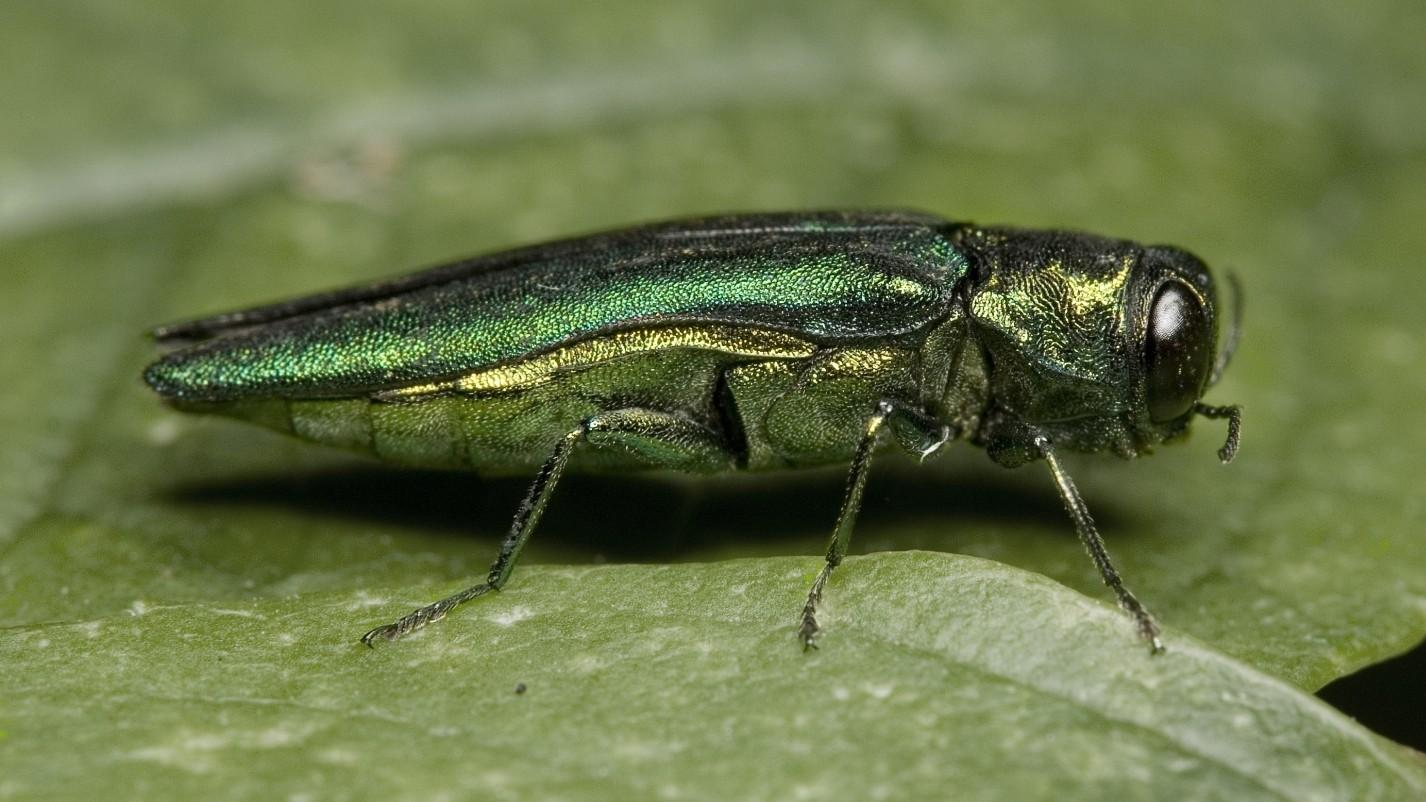
The Canadian Food Inspection Agency has announced that Emerald Ash Borer has been discovered in Vancouver, BC. If you’re not familiar, EAB is an extremely harmful pest imported from Asia on shipping materials like ash-wood pallets. It is extremely harmful because it loves ash trees (Fraxinus) and has no natural predators in North America.
Those of you of a certain age will remember the devastation caused by Dutch Elm Disease (DED), a fungal disease that, again, probably arrived in wood pallets made of elm. Our native elm beetles munched on the pallets, ingested the disease and then spread it to our native elms. Our native elms had not evolved any defence to this foreign invader and millions of elms died. The elm is a hardy, tough, glorious shade tree that had been widely planted on the Prairies. Suddenly, main streets, parks and home landscapes were bare, with a loss of shade, loss of habitat for birds and small critters, increases in wind speeds and, well, just a huge loss of natural beauty.
The Emerald Ash Borer lays eggs on the bark which hatch, burrow in and then tunnel their way through the tree, disrupting the vessels that carry water and nutrients up and down the tree. Programs in the U.S. and Canada have not had much success killing the beetles; the young beetles are well protected inside the tree and the window of opportunity to kill the adults as they emerged in the spring to lay eggs was very small.
Like DED, the losses to EAB can be devastating to habitat, loss of cooling effect and the beauty of parks and gardens. This is amplified now by the threat of forest fires; dead, dry trees in the environment provide excellent fuel.
It is believed EAB first landed in ports in Detroit, Michigan and Windsor Ontario in 2002, affecting our native green and black ash. These species grow mainly in colder climates in east and central Canada and the US. It was hoped that the extreme cold of the Prairies would stop the bug, but it has over-wintered in Manitoba. There are other native ash species in the west in California, Oregon and as far south as the Carolinas in the US. There’s an excellent article here on all the North American species. The fear for horticulturalists is that the bug can now spread from the west out and south.
So, please do ‘due diligence’. There will be bans on transporting ash firewood, much as there are bans on moving elm wood. Nurseries in the west of Canada and the US may quit carrying stock of ash trees.
I don’t mean dull or uninteresting. I mean the types of bugs that burrow into your trees and cause damage. Every eco-system that has trees has some type of boring insect, usually the young stage of a beetle or weevil (Coleoptera). I don’t count termites in this group because, largely, they eat dead wood or lumber, not live trees. I’m sure Mother Nature considers the termite a good friend and an awesome recycler, breaking down fallen trees in the forest or jungle. Humans don’t appreciate them when they start to eat their way through the wooden infrastructure of our buildings, bridges and furniture.
Let’s look at our native poplar borer. The adults live for just a few months in early summer. They feed on tender new growth. The female will lay eggs in furrows in the bark. The eggs hatch and the babies burrow into the tree. They can live two to four years inside a tree! They eat xylem and phloem, disrupting the flow of water and nutrients through the tree. They can munch their way right through to the heartwood and seriously compromise a tree.
When diagnosing pests and diseases of trees and shrubs we’re looking for signs and symptoms. Signs that you have a pest include small holes in the trunk. In the case of poplar borer these are near the base or above the root flare, and may leak sap. There may be frass or sawdust at or under the hole. If woodpeckers are particularly interested in your trees you may have a boring insect. In the case of the bronze birch borer, the holes are a distinctive ‘D’ shape and are higher, usually between a human’s knee and shoulder. Symptoms of borers include die back of the top growth or side branches, swelling under the bark or sap leaking.
Generally, our native boring insects are not a huge problem. They are part of an eco-system, they have their good years and their bad years. They have their own predators, diseases and stresses. Late frost can kill the emerging adults. Woodpeckers and nematodes can attack them, they have their own parasites and fungal diseases. Research has shown that a healthy tree is less prone to borer attacks. Some years ago the paper birch (Betula) became very popular as a landscape tree here on the Prairies. Natively, the paper birch is found in moist areas along streams, lakes, boggy areas. Homeowners bought them, plunked them in the middle of a suburban lawn and ignored them. The trees were stressed, thirsty and were attacked by bronze birch borers. Keeping your trees healthy is half the battle; choosing the right tree is the other half.
Twenty years ago we had a class of pesticides known as systemics. These were chemicals that, to simplify, were absorbed by the woody plant, became part of the plant and bugs that ate that plant died. It was really the only way to deal with pests protected by being inside the tree. Most systemics were removed from sale to residential users in Canada for being too toxic to humans, to the birds and the bees, and to aquatic creatures. Anyone remember Cygon 2-E? I am watching, with interest, the Canadian Forest Service developing a systemic from the Neem tree called TreeAzin.
When boring insects become a huge problem is when they are not native. They have no predators, no diseases and trees do not have a natural resistance. A recent example of a disastrous introduction is the accidental importation of the Emerald Ash Borer into North America. In it’s native Siberia, northern Russia and north Asia the beetle have predators such as parasitizing wasps. Native birds will eat the adults, but here the birds didn’t know what to make of them. The loss in mature ash trees is estimated in millions of trees and billions of dollars. Read more about it here. Another case is the disease Dutch Elm Disease, when a the Elm Bark Beetle was introduced. The beetles carried a fungus which devastated the majestic elms. Read more about it here. The loss of millions of shade trees results in loss of habitat, loss of shade and cooling, loss of windbreak.
So what’s the homeowner to do? First and foremost, keep your trees healthy. Fertilize or amend your soil in spring, water well during times of drought. Examine your trees in Spring and Fall looking for signs and symptoms. Check the websites of your local extension service, local university or government body responsible for forests and agriculture (in Canada to Natural Resources Canada) to stay apprised of problems. Because isn’t your glorious shade tree worth a little effort?

 Peace Signs and Pruners