• I Thought We Knew Better

    September 6, 2023
    Environment, Mother Nature, Planet Earth

    In the last six or eight weeks my various social media feeds have been filled with images of the aftermath of music festivals and other large gatherings. I follow a number of environmentally conscious creators. When I first saw these pictures I was appalled. Fields filled with garbage, abandoned tents, broken camp chairs and more. How can this still be happening in 2023?

    It is fantastic to get out and enjoy Mother Nature. It’s a wonderful vibe to catch live music in a beautiful setting. But to leave the area despoiled? Who could possibly think that that is a good thing to do?

    Media says Gen Z and Millennials are the most concerned about climate change. Check out this article from Pew Research or this from Forbes Magazine. Such young people would certainly be a large portion of the audience for such concerts. Were they there showing off their latest cool thrifted clothes? Where’s the disconnect? How can one be concerned about the environment but leave such a mess behind.

    Not only the pollution and garbage astounded me. The waste! Thousands of dollars in perfectly good tents, sleeping bags and clothing that could have been donated to homeless people or those suffering from environmental disasters. These concert goers can’t be concerned with the cost of paying the mortgage or buying groceries. To be able to afford tickets, then purchase items to a simply abandon them? What about the three R’s of recyling: Reduce, Reuse and Recycle? Are these entitled people who just assume someone will just clean up after them?

    The Reading Festival in Britain had over 100,000 attendees. It had a small group of 500 volunteer to do clean-up. They had a little over 24 hours to do what they could do collect, reuse, recycle; after that bulldozers would come in to simple push the garbage up and take it to the landfill. Kudos to those volunteers!

    While doing research for this piece, inevitably Mount Everest came up. Since Edmund Hillary and Tenzing Norgay first climbed it in 1953, to world attention, thousands of others have made the attempt. And left their garbage. So, people go to challenge themselves at one of the Earth’s most glorious locales, and despoil it. Read more about the attempts to clean it, and keep it clean, from this article in National Geographic. And music festivals are trying as well, here’s an article from Rolling Stone that looks at some of the solutions.

    Ultimately, if you are not part of the solution, you are part of the problem. What will it take to make people more aware of their own part in the problem? I recall Canada doing some ad campaigns in the ’60’s and ’70’s bringing attention to the problem of littering. Is is time again?
    No comments on I Thought We Knew Better
  • The Bounty of Summer Squash

    September 2, 2023
    Cooking, Gardening

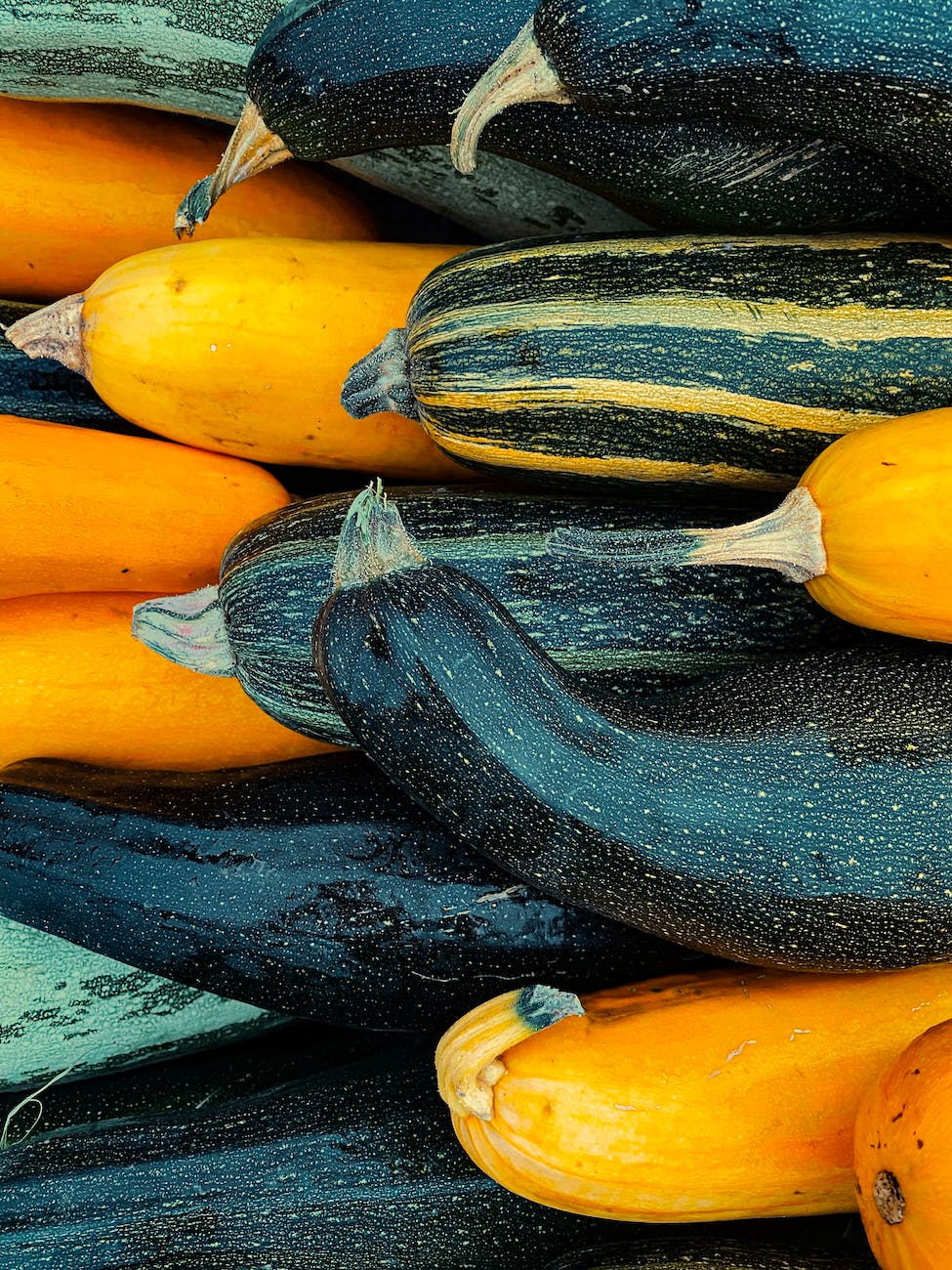
    Are you finding zucchini on your doorstep? Or are you perhaps the one sneaking around at night leaving zucchini on doorsteps? Tripping over them in your garden? Ah, the abundance of zucchini!

    Photo by Eugene Golovesov on Pexels.com

    Zucchini is part of the larger group known as summer squash. These are soft, edible skinned vegetables as opposed to winter squash with tough shells. There are many types of summer squash. If we were to start a garden now I don’t think we would even plant zucchini; there are members of the group that we just prefer such as Moroccan or Patty Pans. Nonetheless, a great value for the price of a pack of seeds.

    When I first heard about zucchini chocolate cake I thought it was brilliant! I’m a chocoholic and to get delicious, moist cake with a serving of vegetables is almost too good to be true. Check out this recipe from ‘Two Peas in Their Pod’. While you’re there check out the zucchini snack cake, too. I made these fritters with a green and a gold zucchini and it was tasty and pretty on the plate. I can see the possibilities with changes in the herbs and spices to keep it interesting.

    This pasta from Stanley Tucci was easy and delicious. It would best be made with young, small squash so there is less seeds. How about a crustless Greek Quiche? These stuffed zucchini planks from Thomas Keller were delicious and not mushy. Hummus lover? Try this zucchini humus, use it as a dip with all your fresh raw garden veggies.

    Can you preserve summer squash? You bet! Here’s Getty Stewart’s take on freezing zucchini. I freeze it in the portion size for making chocolate zucchini cake. How about canning a tasty zucchini relish? It’s a sweet relish perfect for hotdogs and hamburgers all winter long.

    Need more? Take a look at Closet Cooking, a great Canadian food blog where he is cooking great things out of a teeny tiny apartment kitchen. He’s got zucchini recipes from breakfast to dinner, desserts and snacks, too. Zucchini pancakes, oh yeah!

    Don’t forget: your local food bank or soup kitchen would be delighted to take some zucchini off your hands. Bon appetit!

    1 comment on The Bounty of Summer Squash
  • It’s The Most Wonderful Time…

    August 27, 2023
    Cooking, Gardening

    No, it’s not Christmas. Or Halloween. It’s garlic harvest!

    We are huge fans of garlic in this household. I’ve written about it before and I will write about it again. Year after year. There is nothing quite like fresh, local garlic. It’s so much more delightful than what is usually available in the stores which has often been in storage for months. Fresh and local is always better: more flavour, creamier texture.

    To celebrate the first purchase of the year I chose four heads from the two pounds that we bought. I sliced off the tops, trimmed the roots, drizzled the heads with olive oil and roasted for half an hour at 375o F. in our toaster oven. I let it cool than peeled off the papery cover. I used one head, five plump cloves, to slather on toasted, well buttered bread and served with a bowl of soup. The rest I refrigerated to add to stir fries, stews and soups. I’ll also use it in the next few days on baguette or crackers with melted brie. Yummy!

    Garlic is an easy crop to grow. Buy your heads now but do not plant until the weather and soil cools considerably! For us in Manitoba, planting is often the first couple weeks of October. With the increased interest in the last few years with growing food, planting garlic has sold out quickly. It should be in garden centres now, along with other fall planted bulbs like tulips and daffodils.

    Garlic wants to be in full sun, with well drained soil. To develop fat cloves it needs consistent water. You do not have to have a vegetable garden; garlic cloves can easily be tucked into an existing shrub or perennial border. The strappy foliage looks fantastic with the larger leaves of perennials and shrubs. Simply break out the cloves, plant down three times the length of the clove, pointy side up. In a cold climate like ours I would mulch well with leaves, and don’t be in too much of a hurry to remove the mulch in spring.

    Garlic comes in hardneck or softneck forms. They’re both delicious but I prefer to plant hardneck because then you get scapes. Scapes are the flowering stem of garlic, a curly shoot that grows above the foliage. Remove them when they have the curl but before they get too woody and they are good eating. The mild garlic flavour is excellent for stir fries, as a garnish, and such. The scapes should be removed so that more energy goes into developing your cloves. I’ve used the scapes to make a form of pesto, which was excellent on baguettes but also a great base for a salad dressing.

    If you are in Manitoba, there is an excellent Facebook page ‘Manitoba Garlic Growers’. You can get info on when other people are planting, when they are taking their scapes, when they are harvesting. I’m sure whatever place you are in you can find something similar. Happy Planting! And good eating to you!

    1 comment on It’s The Most Wonderful Time…
  • Keep Annuals All Winter

    August 13, 2023
    Gardening, Plants, Propagating
    Photo Author’s Own

    Here in Manitoba, our first frost date this year is September 11, although we all know it can happen sooner. If you’d like to check your first frost date or Canadian Hardiness Zone check out this great link from Vesey’s Seeds. First frost signals the beginning of the end of the growing season, but not the gardening season. There are many chores we can (and should) accomplish right up until snowfall. Right now the priority is to preserve or save really tender plants that won’t tolerate frost.

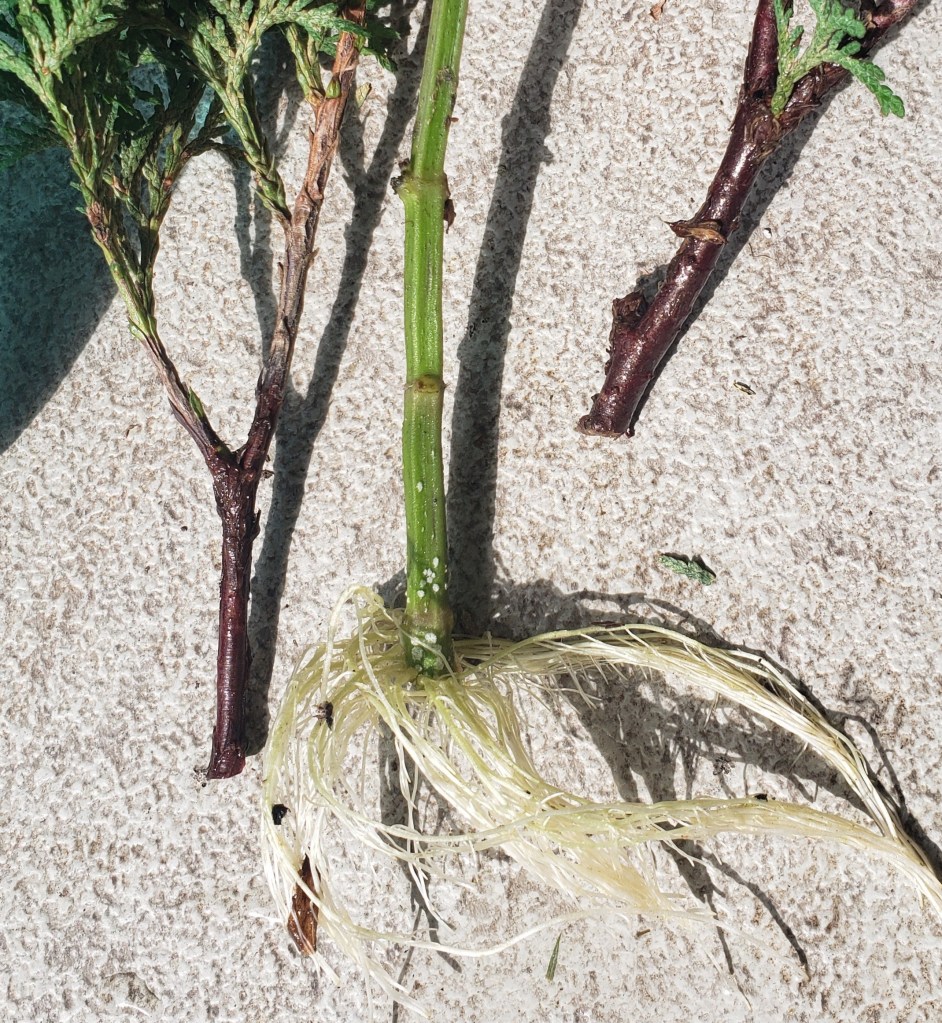
    A few weeks ago a container on my balcony fell over in the wind. Some coleus and cedar snapped off. I had a space on a shelf to fill so I stuck the pieces in a vase, outside, getting a couple hours of sun a day. About three weeks later I was topping up the water and noticed a lovely bunch of roots on the coleus. Yeah! I’ll be potting up that little baby!

    Now, do notice the lovely roots on the coleus and no roots on the woody cedar. Water rooting is for fleshy, juicy plants: annuals, herbs and houseplants can do well. If you wish to propagate woody trees and shrubs you are better off getting some rooting hormone and putting them right in soil. (That’s a whole other blog post.)

    The roots reminded me to start propagating other things I wish to keep. More coleus (Coleus), because it can make a lovely houseplant. The basil (Ocimum) for sure and I think I will try to root big-leaf wire vine (Muehlenbeckia). If you have fresh, soft tips on rosemary or lavender you can try water rooting, but you may be better served by doing woody cuttings.

    Process is simple; I’ve taken three to four nodes (where the leaves emerge from the stem), stripped the leaves from the bottom sets of nodes and submerge the stem in water. When the roots are sufficient I will pot them into soil. You cannot expect much from these cuttings through the winter unless you put them under grow lights.

    Potted plants can come right inside when the weather cools. Many tender herbs and annuals will not tolerate frost or cool temperatures at all. Geraniums (Pelargonium) do well, many herbs can come right inside, English ivy (Hedera) and spikes (Cordyline and Dracaena) to name a few. I do know people that let their geraniums get some frost then they remove them from the pots, trim them, clean the roots off and dry them bareroot. Some gardeners hanging from the root cellar ceiling or store them in paper bags. Bareroot needs to be cool but with some moisture in the environment.

    Examine the plants for signs or symptoms of pests and disease and if you don’t find them, don’t freak about bugs. People do a lot of damage by re-potting, spraying roots with insecticides and all sorts of over-the-top techniques that often aren’t necessary. Perhaps segregate the cuttings or pots, if you’re nervous.

    As our days get shorter, the plants know and will want to take a rest. Allow them this: don’t water much, don’t fertilize, keep them warm but away from hot drafts from furnaces or fireplaces. Then, with grow lights, you can bring them back into active growth in February or March. The basil I’m putting under grow lights right away because I always need fresh basil!

    Will you be preserving any summer plants? Let me know in the comments!

    1 comment on Keep Annuals All Winter
  • Your Roots Are Showing!

    August 6, 2023
    Gardening, Plants
    Photo Author's Own

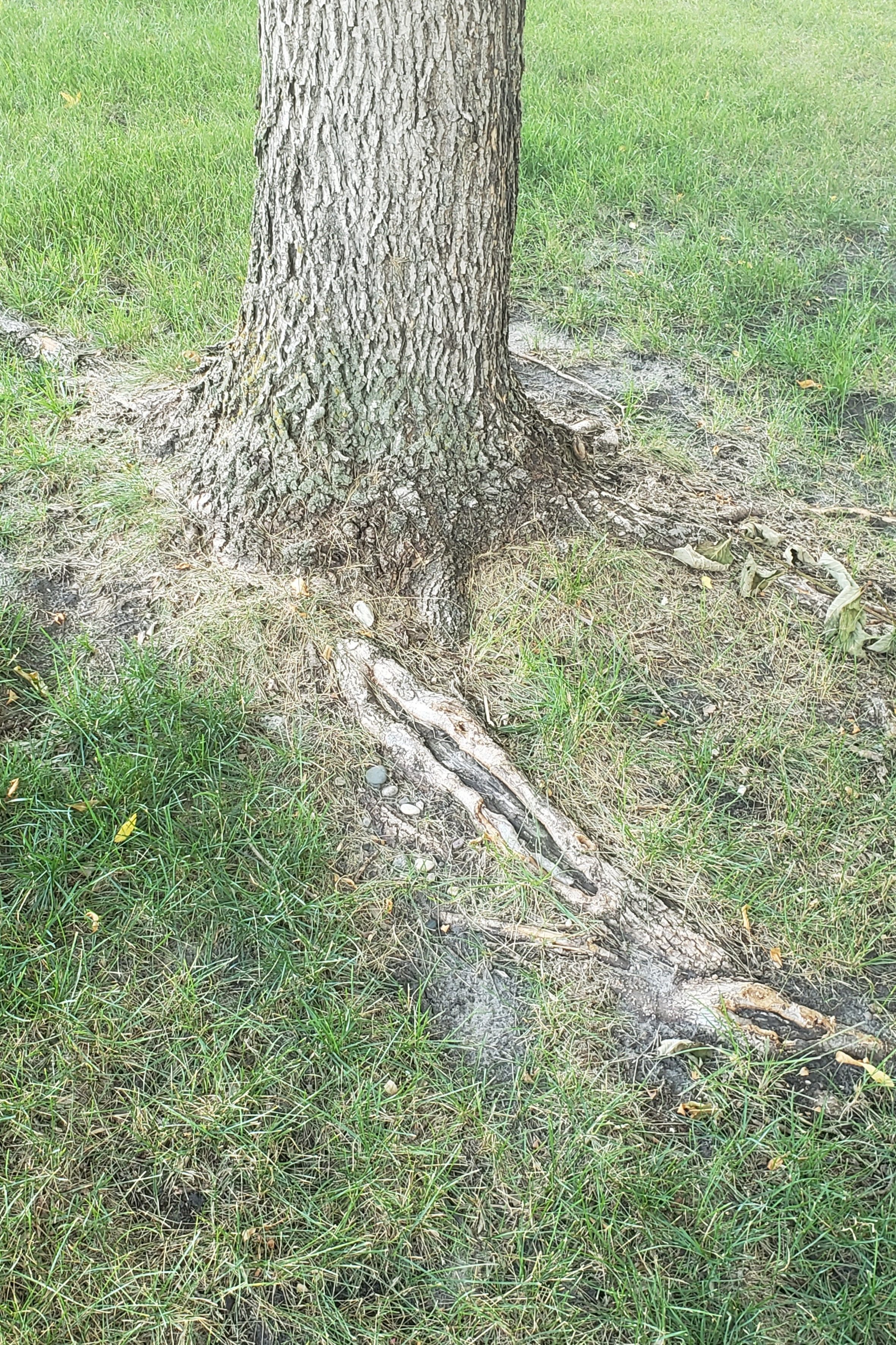
    Have you ever seen a mature tree that has fallen over? Ever notice that the roots are like a pancake beneath the tree? Very few trees hardy on the Canadian Prairies have deep tap roots: Pines, Oaks, Willows, Silver Maple, Walnuts, Amur Maple, Elms and Ash. In warmer climates Sweet Gum, Eastern Redbud, White Mulberry, Black Gum, Fig Tree and more.

    Most tree roots (and shrubs) are in the top three to six feet of the soil, spreading widely to six to twenty feet beyond the branch spread. The spread is to allow the tree to take the most advantage of rainfall, without being hindered by its’ own canopy. It’s one of the reasons that it is hard to establish shrubs and perennials around mature trees. There is much competition for water from the tree roots.

    Why do tree roots surface? Compaction of soil around the plant, for one. The young tree was probably planted in fluffy, newly amended soil. Over the years people, animals, lawn mowers and even rain have slowly tamped the soil down. Another reason tree roots are exposed is run-off, water from rain or snow melt simply moves the soil to a lower elevation.

    The number one reason roots come to the surface is that the roots are seeking oxygen. Roots need oxygen to function. Good soil is a combination of air pores, organic matter, rock particles (minerals), little tiny creatures and retained water. Compaction and heavy clay soils eliminate air pockets, hence roots migrate upwards. Waterlogged soil has few air pockets, the tree in the picture is close to a river that has been known to flood. The water table can be very high here. Tree roots are powerful in their search; have you ever seen the roots of a tree buckle pavement? (Street trees being some of the most stressed trees on the planet. Harsh place to grow!)

    So, what to do if your roots are showing? On a mature tree no need really to do anything, the tree has adapted. If it’s doing fine, don’t worry. Try not to damage the exposed roots as wounds can allow in pathogens. If you don’t like the look you can cover them with soil but only to the level where the roots flare out from the trunk. Never, ever, ever, never bury the trunk of tree! If you’re watering, remember the the most viable roots are out beyond the branches and water there.

    Cheers! Hope you can find some shade in this summer heat!

    No comments on Your Roots Are Showing!
Previous Page
1 … 9 10 11 12
Next Page

Start a Blog at WordPress.com.

Peace Signs and Pruners

Caring for Mother Nature While Making Her a Little Bit Prettier!

    • About
    • Search Categories


Loading Comments...
 

    • Subscribe Subscribed
      • Peace Signs and Pruners
      • Join 25 other subscribers
      • Already have a WordPress.com account? Log in now.
      • Peace Signs and Pruners
      • Subscribe Subscribed
      • Sign up
      • Log in
      • Report this content
      • View site in Reader
      • Manage subscriptions
      • Collapse this bar