Here in Manitoba, our first frost date this year is September 11, although we all know it can happen sooner. If you’d like to check your first frost date or Canadian Hardiness Zone check out this great link from Vesey’s Seeds. First frost signals the beginning of the end of the growing season, but not the gardening season. There are many chores we can (and should) accomplish right up until snowfall. Right now the priority is to preserve or save really tender plants that won’t tolerate frost.
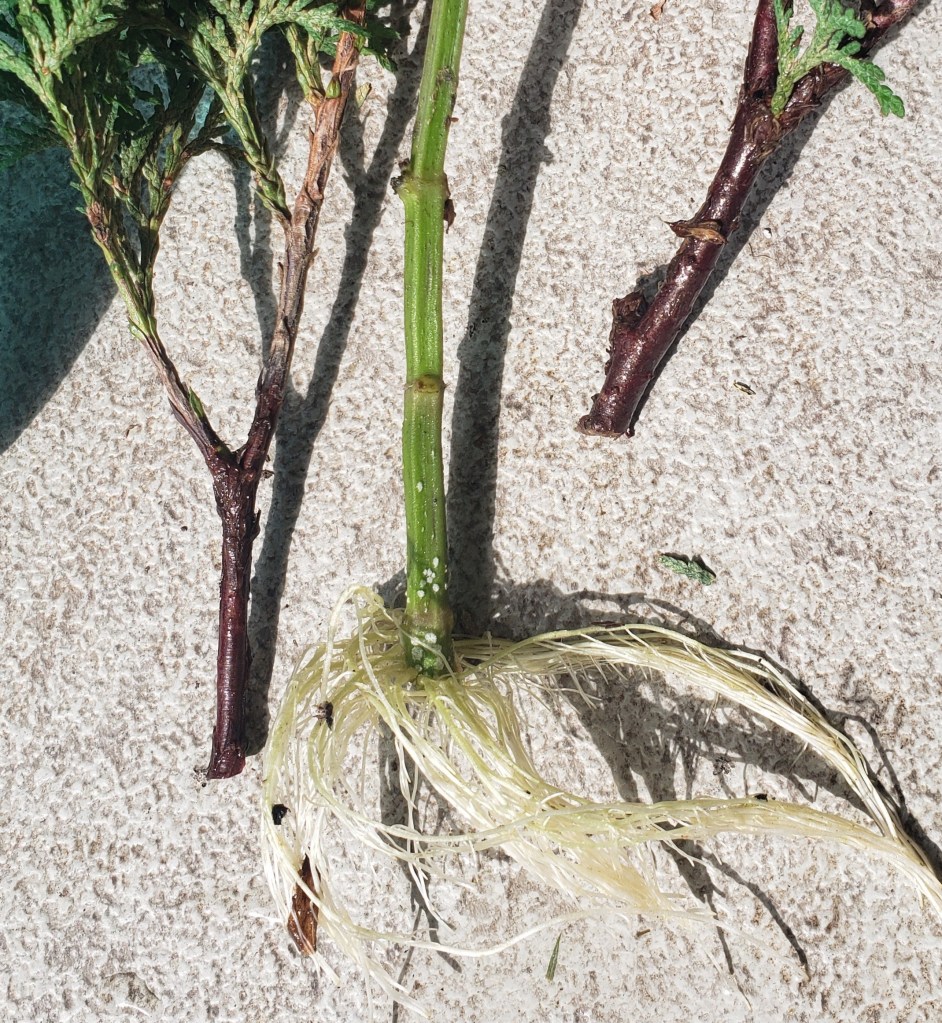
A few weeks ago a container on my balcony fell over in the wind. Some coleus and cedar snapped off. I had a space on a shelf to fill so I stuck the pieces in a vase, outside, getting a couple hours of sun a day. About three weeks later I was topping up the water and noticed a lovely bunch of roots on the coleus. Yeah! I’ll be potting up that little baby!
Now, do notice the lovely roots on the coleus and no roots on the woody cedar. Water rooting is for fleshy, juicy plants: annuals, herbs and houseplants can do well. If you wish to propagate woody trees and shrubs you are better off getting some rooting hormone and putting them right in soil. (That’s a whole other blog post.)
The roots reminded me to start propagating other things I wish to keep. More coleus (Coleus), because it can make a lovely houseplant. The basil (Ocimum) for sure and I think I will try to root big-leaf wire vine (Muehlenbeckia). If you have fresh, soft tips on rosemary or lavender you can try water rooting, but you may be better served by doing woody cuttings.
Process is simple; I’ve taken three to four nodes (where the leaves emerge from the stem), stripped the leaves from the bottom sets of nodes and submerge the stem in water. When the roots are sufficient I will pot them into soil. You cannot expect much from these cuttings through the winter unless you put them under grow lights.
Potted plants can come right inside when the weather cools. Many tender herbs and annuals will not tolerate frost or cool temperatures at all. Geraniums (Pelargonium) do well, many herbs can come right inside, English ivy (Hedera) and spikes (Cordyline and Dracaena) to name a few. I do know people that let their geraniums get some frost then they remove them from the pots, trim them, clean the roots off and dry them bareroot. Some gardeners hanging from the root cellar ceiling or store them in paper bags. Bareroot needs to be cool but with some moisture in the environment.
Examine the plants for signs or symptoms of pests and disease and if you don’t find them, don’t freak about bugs. People do a lot of damage by re-potting, spraying roots with insecticides and all sorts of over-the-top techniques that often aren’t necessary. Perhaps segregate the cuttings or pots, if you’re nervous.
As our days get shorter, the plants know and will want to take a rest. Allow them this: don’t water much, don’t fertilize, keep them warm but away from hot drafts from furnaces or fireplaces. Then, with grow lights, you can bring them back into active growth in February or March. The basil I’m putting under grow lights right away because I always need fresh basil!
Will you be preserving any summer plants? Let me know in the comments!

 Peace Signs and Pruners
Leave a comment