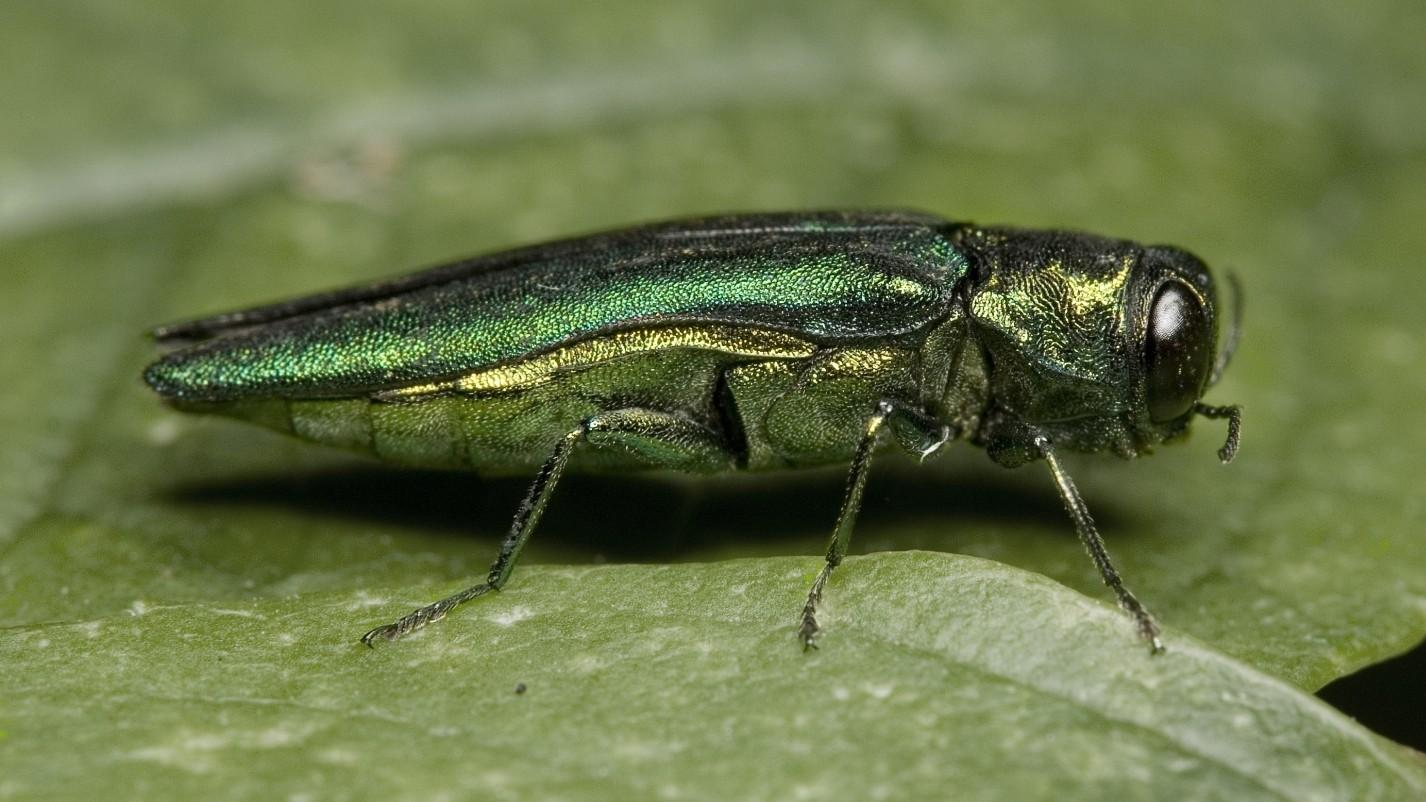
The Canadian Food Inspection Agency has announced that Emerald Ash Borer has been discovered in Vancouver, BC. If you’re not familiar, EAB is an extremely harmful pest imported from Asia on shipping materials like ash-wood pallets. It is extremely harmful because it loves ash trees (Fraxinus) and has no natural predators in North America.
Those of you of a certain age will remember the devastation caused by Dutch Elm Disease (DED), a fungal disease that, again, probably arrived in wood pallets made of elm. Our native elm beetles munched on the pallets, ingested the disease and then spread it to our native elms. Our native elms had not evolved any defence to this foreign invader and millions of elms died. The elm is a hardy, tough, glorious shade tree that had been widely planted on the Prairies. Suddenly, main streets, parks and home landscapes were bare, with a loss of shade, loss of habitat for birds and small critters, increases in wind speeds and, well, just a huge loss of natural beauty.
The Emerald Ash Borer lays eggs on the bark which hatch, burrow in and then tunnel their way through the tree, disrupting the vessels that carry water and nutrients up and down the tree. Programs in the U.S. and Canada have not had much success killing the beetles; the young beetles are well protected inside the tree and the window of opportunity to kill the adults as they emerged in the spring to lay eggs was very small.
Like DED, the losses to EAB can be devastating to habitat, loss of cooling effect and the beauty of parks and gardens. This is amplified now by the threat of forest fires; dead, dry trees in the environment provide excellent fuel.
It is believed EAB first landed in ports in Detroit, Michigan and Windsor Ontario in 2002, affecting our native green and black ash. These species grow mainly in colder climates in east and central Canada and the US. It was hoped that the extreme cold of the Prairies would stop the bug, but it has over-wintered in Manitoba. There are other native ash species in the west in California, Oregon and as far south as the Carolinas in the US. There’s an excellent article here on all the North American species. The fear for horticulturalists is that the bug can now spread from the west out and south.
So, please do ‘due diligence’. There will be bans on transporting ash firewood, much as there are bans on moving elm wood. Nurseries in the west of Canada and the US may quit carrying stock of ash trees.

 Peace Signs and Pruners
Leave a reply to Jes Cancel reply